Showing posts with label logical fallacy. Show all posts

Friday, May 14, 2010

Is Jesus God? pt. 3/4

This is my third day tackling the logical fallacies, deceptions, and things that make you say, "Huh?" in Paul E. Little's EveryStudent.com article "Beyond Blind Faith" (which is supposed to give us good solid reasons and evidence for Jesus being God.)

On the first day, all Mr. Little brought to the table was the fact that the Jesus story went viral and Bible verses where Jesus claimed to be the son of god, able to heal, and able to forgive sins. I pointed out why these had no impact on the validity of the truth claims being made (and why Jesus has no more evidence for his divinity than Charles Manson.) On the second day, we dealt with the Liar, Lunatic, Lord, or Legend apologetics. Mr. Little could only claim that Jesus was the Truth (his capital T) but he didn't offer any compelling evidence as to why we should think that. Let's see what's in store for us today, shall we?

The Life of Jesus - How He Proved His Deity

His Unique Moral Character

His moral character coincided with His claims. Many asylum inmates claim to be celebrities or deities. But their claims are belied by their characters. Not so with Christ. He is unique -- as unique as God.
First of all, I find it odd to say it is someone's "character" which reveals them not to be, say, Abraham Lincoln. It's also important to point out that not every delusion person is in an institution. I could make an obvious remark about religious people, but even refraining from that easy target, many people believe in ghosts, communication with the dead, homeopathy, so-called "9-11 Truth", a faked lunar landing, vast rightwing/leftwing conspiracies, government cover-up of UFOs, etc. Again, it isn't "character" we use to judge the validity of their claims - it is evidence. Can you actually divine water, or are you just a bit gullible?

Jesus Christ was sinless. The caliber of His life was such that He was able to challenge His enemies with the question, "Can any of you prove Me guilty of sin?" He was met by silence, even though He addressed those who would have liked to point out a flaw in His character.
Well, now this directly contradicts what Mr. Little was saying in Part 1, where he discussed Jesus' trial, and the Jewish elders accusing him of blasphemy. Jesus was only "sinless" if we excuse each of his transgressions, the largest of which I would imagine would be this blasphemy. But let's see if there are any other sins we can say Jesus committed in the Bible. Well, he certainly didn't honor his mother. Check out John 2:3-4 and Matthew 12:46-49. Jesus definitely taught that you should abandon your own family and instead consider your fellow believers to be your new family (like most cult leaders.) Jesus also worked on the Sabbath, which is another of the ten commandments. He's batting at 80% as it stands, even without counting his blasphemy as taking the Lord's name in vain. How was Jesus sinless again?
We read of the temptations of Jesus, but we never hear of a confession of sin on His part. He never asked for forgiveness, though He told His followers to do so.
Yeah, and my grandmother has never recanted her faith healing beliefs, or owned up to her responsibility in Harrison Johnson's death, but that doesn't mean she is innocent.
This lack of any sense of moral failure on Jesus' part is astonishing in view of the fact that it is completely contrary to the experience of the saints and mystics in all ages. The closer men and women draw to God, the more overwhelmed they are with their own failure, corruption, and shortcomings. The closer one is to a shining light, the more he realizes his need of a bath. This is true also, in the moral realm, for ordinary mortals.
Couple of points here. First off, there are some people who do not experience emotions the same way that most of us do. There are sociopaths, and while I'm not claiming Jesus was a sociopath, it could certainly be a possibility he felt no guilt about breaking laws because he was a hypocrite. I mean, hypocrites are incredibly common and demigods aren't, so just going with the odds here, it's not looking too good for Jesus' divinity. It seems like only someone who already believed could come to the conclusion, based on evidence alone, that Jesus was more likely to be a god than mentally off balance.

Second point I'd like to make is how crappy being close to God sounds from Mr. Little's description. You'll feel dirtier and dirtier, be overwhelmed by your own failure and shortcomings, and basically feel like crap? Oh wait, that was kinda true. My life as an atheist is so much happier than my life as a Christian. The constant sense of nagging guilt and incurable shame just didn't give me the "comfort" people claim religion provides.
It is also striking that John, Paul, and Peter, all of whom were trained from earliest childhood to believe in the universality of sin, all spoke of the sinlessness of Christ: "He committed no sin, and no deceit was found in His mouth."

Pilate, no friend of Jesus, said, "What evil has He done?" He implicitly recognized Christ's innocence. And the Roman centurion who witnessed the death of Christ said, "Surely He was the Son of God."
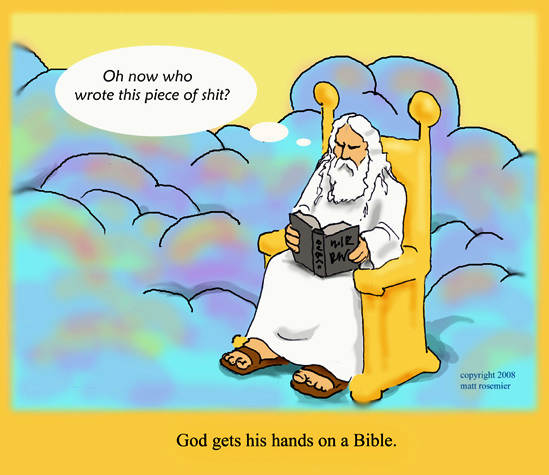
Okay, this is where I have to explain why the Bible isn't evidence for the Bible. So far, I've let the apologist use Scripture as evidence without complaint; I've just used Scripture that contradicts his point to show where I disagree. But the contradictory, open-to-interpretation nature of the Bible is not its only weakness. Its construction is.

The Bible was written by men, not god. The Bible was scribbled down over hundreds of years, changed, rewritten, transcribed, voted on, canonized, rewritten, transcribed, and changed again. There is no reason to suppose the Bible is the word of God(s).

I challenge anybody to find anywhere where God says "Build this book. This is going to be my Word." - Tracie Harris
Brilliant.
His Ability to Control Nature
Christ demonstrated a power over natural forces which could belong only to God, the Author of these forces.

He stilled a raging storm of wind and waves on the Sea of Galilee. In doing this He provoked from those in the boat the awestruck question, "Who is this? Even the wind and waves obey Him!" He turned water into wine, fed 5,000 people from five loaves and two fish, gave a grieving widow back her only son by raising him from the dead, and brought to life the dead daughter of a shattered father. To an old friend He said, "Lazarus, come forth!" and dramatically raised him from the dead. It is most significant that His enemies did not deny this miracle. Rather, they tried to kill Him. "If we let Him go on like this," they said, "everyone will believe in Him."
Ladies and gentlemen, may I present to you, Derren Brown. He can walk across broken glass without harm, beat 9 chess masters and grand masters at once, and control a mall full of shoppers with the sound of his voice. (I also recommend "The Heist" where he gets law-abiding citizens to attempt a bank robbery.) Sorry, but Derren Brown is way cooler than Jesus (and a much better dresser, I must say.)

If you must have your water turned into wine, Penn and Teller have got that one down, too. And is it really so extraordinary for Jesus to turn water into wine, when a billion Catholics believe their priests can turn wine into blood? (And if you think all those Catholics are wrong, what makes you think the anonymous authors of the Bible got it right?)
Cured the Sick
Jesus demonstrated the Creator's power over sickness and disease. He made the lame to walk, the dumb to speak, and the blind to see. Some of His healings were of congenital problems not susceptible to psychosomatic cure. The most outstanding was that of the blind man whose case is recorded in John 9. Though the man couldn't answer his speculative questioners, his experience was enough to convince him. "One thing I do know. I was blind but now I see!" he declared. He was astounded that his friends didn't recognize this Healer as the Son of God. "Nobody has ever heard of opening the eyes of a man born blind," he said. To him the evidence was obvious.
Ha! Nice that he included the bit about psychosomatic cures. This takes care of my first complaint. The second of course is the assumed accuracy that he gives the Bible. Apologists aren't really writing for non-Christians. They are writing for members of the flock who need their faith bolstered. If you accept the Bible as God's one true Word, then of course Bible verses supporting your point of view or your desire will be momentarily comforting to the cognitive dissonance faith yields. But if you don't start with the premise that every story recorded in the Bible is accurate and free from exaggeration, mythologizing, or factual error, then you are not going to be persuaded by what some anonymous goat herder wrote down nearly two thousand years ago.
His Greatest Proof - Rising from the Dead
Jesus' supreme credential to authenticate His claim to deity was His resurrection from the dead. Five times in the course of His life He predicted He would die. He also predicted how He would die and that three days later He would rise from the dead and appear to His disciples.

Surely this was the great test. It was a claim that was easy to verify. It either happened or it didn't.
Sure, at the time it would have been fairly easy to verify, but since we have none of that evidence today, what you're really going to do is ask me to rely on hearsay. A dying and resurrecting god is hardly new to human mythology. What you have is a claim that Jesus died and resurrected; there is no evidence.
The Life of Jesus - Why the Resurrection Is Centrally Important

Both friends and enemies of the Christian faith have recognized the resurrection of Christ to be the foundation stone of the faith. Paul, the great apostle, wrote, "If Christ has not been raised, our preaching is useless and so is your faith." Paul rested his whole case on the bodily resurrection of Christ. Either He did or He didn't rise from the dead. If He did, it was the most sensational event in all of history.
Why? Why would it be so sensational, when Jesus was reviving people right and left in the gospels? Heck, women gave birth in their 90s, according to the Old Testament. That has to be at least as impressive as yet another resurrection, right? And notice how a non-believer like myself is branded an "enemy of the Christian faith." I mean, yes, I'd love to see all religions tossed in the bin, but I'm a non-combatant "enemy."
If Christ rose, we know with certainty that God exists, what He is like, and how we may know Him in personal experience. The universe takes on meaning and purpose, and it is possible to experience the living God in contemporary life.
Uh, no. Whether or not Jesus died and rose again has nothing to do with his claims. It certainly doesn't answer the question of purpose or meaning to the universe. You cannot get from "I have a baseball" to "I know everything about every baseball team and player that ever lived, and all the coaches give me free tickets to every single game." That's the kind of leap Mr. Little makes when he says the single event of resurrection imbues meaning into *everything else*. Here's an idea - what if Jesus did (for the sake of argument) rise from the dead, but he hadn't been to Hell, wasn't the Son of God, and couldn't perform miracles or forgive sins. What if someone else more powerful resurrected him (like he did for Lazarus?) Even if there was substantial evidence to believe the resurrection occurred (which there isn't,) it would not mean other, unproven or unprovable claims about an afterlife, a god, and purpose in the universe would then automatically be true.
On the other hand, if Christ did not rise from the dead, Christianity is an interesting museum piece -- nothing more. It has no objective validity or reality.
What is an "interesting museum piece" anyway? I can't say whether I agree or disagree with this assessment, because I have no idea what he means. Poorly defined terms For the Lose. And his second statement here is rather black-and-white. I can see that some of the food and hygiene laws of the Old Testament would have preserved healthier lives for desert dwellers millenia ago. I can giggle at the eroticism of Song of Solomons. I can appreciate the art tax-free churches have commissioned over the years, and (some of) the music. I can say that some of the verses have nice moral sentiments (though by no means a majority.) There is no need for Mr. Little to paint a strawman of nonbelief, but he has done it nonetheless.
Though it is a nice wishful thought, it certainly isn't worth getting steamed up about. The martyrs who went singing to the lions, and contemporary missionaries who have given their lives while taking this message to others, have been poor deluded fools.
Well, yes. But before you go thinking I am rude and condescending, Christians, please tell me what you think of Islamic martyrs, apostles, and missionaries. Are they poorly deluded fools?
The attack on Christianity by its enemies has most often concentrated on the Resurrection because it has been clearly seen that this event is the crux of the matter.
Whoa, attack? Well, since he was just talking about missionaries and martyrs, this must be something quite serious and violent, right?
A remarkable attack was the one contemplated in the early '30s by a young British lawyer. He was convinced that the Resurrection was mere fable and fantasy. Sensing that it was the foundation stone of the Christian faith, he decided to do the world a favor by once and for all exposing this fraud and superstition. As a lawyer, he felt he had the critical faculties to rigidly sift evidence and to admit nothing as evidence which did not meet the stiff criteria for admission into a law court today.
Oh, so the "attack" was actually just someone questioning dogma. I see. (Also, wouldn't it be evidence considered admissible in the 1?30's, rather than "today?")
However, while Frank Morrison was doing his research, a remarkable thing happened. The case was not nearly as easy as he had supposed. As a result, the first chapter in his book, Who Moved the Stone? is entitled, "The Book That Refused to Be Written." In it he described how, as he examined the evidence, he became persuaded against his will, of the fact of the bodily resurrection of Christ.
Okay, now we're being given the argument from personal experience (combined with the "I used to be an atheist" angle we're all so tired of.) Some guy thought the evidence was compelling. Great, now where is this evidence please? I'm not taking someone else's word for this, but I guess it will have to wait till tomorrow when I conclude this series with Part 4 The Life of Jesus - Facts About His Resurrection (*snort!*)


Read more!

Thursday, December 31, 2009

Atheism is NOT a Religion (Really)

So, YouTube ate my first two videos, but after I recorded this third one, it coughed up the second one also. So, I have two videos that are pretty similar but I like this one slightly more.


Here's the second.


So what's your vote, Anteaters? Which do I keep on my channel?

Read more!

Wednesday, December 30, 2009

Irrational Responder (VID)

I, Angie Jackson, do solemnly swear to do my best to get an actually written post on this blog within the next 48 hours. Till then, enjoy my first video counter-apologetic :D


Isn't the internet amazing?

Read more!

Friday, October 23, 2009

You look like God!

Yes, I could go on and on about how much I missed all of you, Hulu and even my stupid farm. I could tell you I actually cried Wednesday night because I missed the internet (my main intellectual/creative/social outlet.) I could tell you that I've already ready every Rowling, Pratchett, and Bujold in my house at least a dozen times, and that I've spent the last four days up to my eyeballs in the dead tree copy of my grandmother's cult hit "Born in Zion." Or I could just jump right into new materials.

From "Born in Zion" Chapter 9: Rhema (a personal revelation or word from God.) Gig wrote a whole chapter of little stories about people (mostly her) getting *exact quotes* from God. Now, she quotes God and Satan both a lot in this book (and not from the Bible, just her own thoughts) but this one really takes the cake.
I was with Lucia and Tony Padrone, very early in their labor, just the three of us sitting around the table in their kitchen. They're gorgeous people, typically Italian and strikingly alike in appearance: medium build, straight noses, full lips, dark eyes, curly brown hair and smooth olive skin.
At one point the conversation lulled, and I made the comment: "Which ever one of you the baby resembles, he'll look like you both. You look enough alike to be twins."
Lucia laughed. "Of course. I'm Tony's rib, so we have the same genetic code, and it's no wonder we look alike."
*facepalm!* That's not how genetics works. (And fyi, men and women have the same number of ribs.)
"Most married people grow to resemble each other, don't you think?" Tony asked.

"Well, maybe they kind of match," I agreed.

We discussed several couples we knew in common, trying to see where they had physical trait alike, coloring or body type or even more often, mannerisms and gestures.
It's important to note here that my grandmother, and most of the people she associated with at the time she wrote this, did not condone interracial marriage. So when she says people had similar coloring, what she means is that she approves of Italian marrying Italians and Jews marrying Jews and African-American marrying African-Americans. True to her form, she did treat individuals and individual couples differently from her broad general view: when a red-headed Irish woman and an African-American man in her congregation married, she didn't cut ties with them or anything like that. She even accepted the black guy I was dating a few years ago, because she knew him as an individual (a pretty cool one at that) and not as a (racist) stereotype.

Also, seeking confirmation bias, much? "trying to see where they had physical trait alike." That just sounds like her approach to everything. Make a generalization or non-scientific observation, decide it's true, and quickly gather data points or ideas to support it. (Can you see yet why I love critical thinking so much?)
Then I left the room for some reason, and as I walked down the hall I wa speaking to the Lord on the same subject. I commented, "I never did look like either one of my husbands."

"True," the Lord replied. "But every now and then, just a little bit, you're beginning to look like Me."
Why am I guessing most Christians wouldn't agree that a self-centered, gluttinous, irresponsible, (twice divorced) baby-killing WOMAN is really all that godly? And yet, they didn't. Over and over again, I saw pastors deferring to her, and men submitting their wives' health to her - all because they thought she had some special pipeline to the almighty, and her ramblings were really revelation.
Oh, what a glory!
She throws in Glory! in this book a lot, and it's incredibly fake. It just sticks out like a sore thumb as this thing she never ever said in real life.
Every unmarried Christian woman knows the wonderful Scripture in Isaiah 54:5, "For thy Maker is thine husband; the Lord of hosts is His name." This principle of married couples looking alike was beginning to apply to me and my present Husband. Isn't that wonderful?
Look at me, I'm so godly. Look, I have the Lord's Seal of Approval (that I just invented!) Let's just ignore all who don't know that verse. Also, it is not a "principle" that married couples look alike. Woody Allen does not look like Soon-Yi Previn. And even though they're much closer in age, both in Hollywood, an both gorgeous, Brad and Angelina don't actually look that much like each other. (Your bone structure does not magically change when you say "I do.")
Of course, in age, gender, racial characteristics, coloring and physique I'm almost nothing like a thirty-three-year old Semitic man who lived an active, outdoor life in a desert country. But that's not what He meant. He meant on the inside; He looks on the heart. Maybe nobody else can see it, but when He looks into my heart, He can once in a while, somehow see a little something of Himself.
Galloping narcissism folks, let me tell you it is not fun to grow up with. How can you argue with someone who so clearly has God her side, right? Of course, this is why second hand revelation is necessarily hearsay. As a child I found it compelling, and the people who read her books and came away from it with a sense that this woman was really godly probably didn't realize that she just gave herself God's endorsement. *It doesn't make it true.* Not for her, or Pope Been-a-dick or Joseph Smith or Mohammad. This is why evidence matters, folks, and not just what some prophet claims God told them.

And now, without any justification other than the fact that I've missed posting funny videos the past few days, Ninja Cat.


p.s. I'll be responding to comments on earlier posts over the next couple of days. I *will* continue the Mercy Ministries posts and other series. I just have to get this garbage from my grandmother out of my system.


p.p.s. I've read so many amazing Bujold quotes the past several days I decided I need to close every post with them until whatever need to express myself through her words is sated. Today's quote is from "Memory."

Harrah was silent for long enough for Lem to paass around the stone jug one last time, in the dim moonlight and shadows. Then she said, "You go on. You just go on. There's nothing more to it, and there's no trick to make it easier. You just go on."

"What do you find on the other side? When you go on?"

She shrugged. "Your life again. What else?"

Read more!

Wednesday, October 7, 2009

Why Pick the God of the Bible? pt. 3

Wordle: Angie the Anti-Theist
That is a Wordle, ranking word usage on my home page by font size. Cool! Click on it to open a new window and randomize the word placement, font style and colors, or make your own.

Now, gentle readers, the time has come to conclude our series "Why Pick the God of the Bible?" The reasons haven't been compelling thus far, and my atheism has remained intact through the first and second posts on this question.

Previously seen on Angie the Anti-Theist (in cool Hulu announcer voice)
  1. A God Who is Greater than We Are
  2. A God Who Can Be Known Personally
  3. A God Who Can Relate to the Human Experience
  4. A God Who Really Cares About Us
  5. A God Who Has Things Completely Under Control
Continuing and concluding our 3 part series "Why Pick the God of the Bible", today we'll begin with
  • The nature of God - A God Who Gives Meaning and Purpose to Life
If you think about an important task or project you completed, you probably recall the sense of purpose you had when it was all over. Is that what you want your overall life to be like? To amount to something? Could there be a God who created your life with purpose, and can lead you to experience that purpose?
Wait a second, accomplishment and purpose are not the same. I felt very accomplished for my work achievements as middle management for an internet education company, but it wasn't my purpose in life, and it wasn't what gave my life meaning. So, let's remove this false equivalency in a moment, but first I want to look at this closely. I do want my overall life to include accomplishment, pride, and jobs well done. Since I don't believe in any supernatural beings of any kind (ghosts, Martians*, and angels included) I think humans are entirely responsible for our actions, and should get the praise for our achievements. So, a god that created my life with a purpose is actually one that interferes with my ability to feel that pride and accomplishment. (How ridiculous is it to see a professional athlete, who spends hundreds of hours practicing and getting into proper physical condition, drop to his knees to thank GOD for his game-changer move?)**
Yes. The God of the Bible can. He promises that he can make our lives meaningful and purposeful. Through a relationship with him, we can "do good works, which God prepared in advance for us to do." We can make a positive difference in the lives of others. We can become part of his master plan.
Try this little experiment with me, if you please. Think of the most cyborg/zombified/"yes master" voice you can. Now re-read the above paragraph, with Scientology terms.

Yes. L. Ron Hubbard of Dianetics can. He promises that he can make our lives meaningful and purposeful. Through a relationship with him and the Church of Scientology, we can clear the planet of Lord Xenu's thetans. We can make a positive difference in the lives of others. We can become part of his master plan.

Ah, cults - Giving rudderless people a sense of purpose since 6,000 BCE TM
The God of the Bible also says that, in a moment-by-moment relationship with him, he can direct our steps so that we can do what pleases him, and what's in our own best interest at all times. "In all your ways acknowledge him, and he will make your paths straight." This is not to say that life becomes perfectly wonderful. There is still illness, problems in life, and personal failures. Life does not become perfect, but it becomes more enriching. The benefits of knowing God, he says, are "love, joy, peace, patience, kindness, goodness, faithfulness, gentleness and self-control.
Anyone else find this proposition threatening to their autonomy? What can I say? After a totalitarian cult childhood, I'm commitment-phobic when it comes to omnipotent, jealous deities. (Besides, Yahweh would be the worst boyfriend ever. And if Mary was still able to claim virginity, even after he knocked her up, I'm guessing he wasn't making up for his asshole ways in the bedroom.)

I've written about the Fruits of the Spirit before (and how they're completely within the scope of non-theists and non-Christian theists to acquire). Even supposing a relationship with JC/YHW really did provide those things, would it be worth the cost of autonomy and adult responsibility? The idea of anyone "moment by moment" telling me how I can direct my steps to please him makes me want a get a restraining order, a second billy club, and about twenty hot showers. Skeezy! Talk about your controlling jealous type.

Obviously I'm not in the market for a god who "gives meaning and purpose", especially if said god wants to do this by directing my steps moment by moment in a Stalinesque dictatorial psycho stalker boyfriend kind of way. Let's move on to the next plug for Biblegod.

Oh, and the sentence should be "There are still illnesses, problems, etc." (Sticklers unite!)
  • The nature of God - A God Who Offers True Fulfillment
Like love and acceptance, most of us want to find fulfillment in life. There seems to be something akin to a thirst within us that yearns to be quenched. But that thirst -- even though we try -- does not get satisfied by things such as money, possessions, romance, or even fun. Therefore, wouldn't it be great if there was a God who satisfies that "thirst," a God whose presence brings a constant level of satisfaction to life?
Most of us want fulfillment. Some are just slackers, right? Or born in poverty. I mean, it's not like Bible God gives them true fulfillment, or at least not this straw man fulfillment of constant satisfaction. Personally, I don't ever want to stop learning, thinking, and improving myself. I don't have a thirst for god, though. (More of a gagging sensation.) And for (I sincerely hope) the last freaking time, "wouldn't it be great" is not an argument. It's wishful thinking, and it shouldn't get to call itself an apologetic.
The God of the Bible offers the most fulfilling life possible. Jesus said, "I have come that they may have life, and have it to the full." He also said, "I am the bread of life. He who comes to me will never go hungry, and he who believes in me will never be thirsty." So, the God of the Bible promises to quench that inner longing that nothing else seems to satisfy. (And he has probably made us in such a way that that is exactly the case!)
Hang on a minute. Let's analyze what this actually says about God's supposed actions. He is all-knowing, all-loving, and all-powerful. He sets up a trap whereby Adam and Eve will only learn what is right and what is wrong after committing a sin that God punishes all future humanity for, with full knowledge of the outcome. He then cursed all future generations of humankind to be born with an inherent sinful nature (except his Son, who then somehow still gets lots of credit for resisting temptation). He made sin incompatible with his nature, and a sinful nature unable to reside in heaven with him. (He made hell as the only other alternative.) Then, in addition to this sinful nature he requires us to have and then rid ourselves of or overcome, he also gives each of us an "inner longing that nothing else seems to satisfy" so that we'll be unhappy unless we're doing what he says?

And you think you have free-will????

That's dictatorship. Celestial is no better than earthly. Might doesn't make right, and this is the worst plan for salvation EVER! Pile the sins on a goat or a god-man and kill it and then everything's okay? Christians like to pretend Jesus ended animal sacrifice, but Christianity just glorifies human sacrifice so much it's disgusting. (Check out these passionate Christians.)


That is not life to the fullest. That is glorification of death. (So is the after-life obsession.)
  • The Ideal God
According to the Bible, there is only one true God, only one Creator of all things. But that God is an ideal God. We cannot wish another God into existence, but even if we could, why would we want to? The true God is already the best possible God.
*spit take* Huh? Okay, let me deal with this. "According to the Bible" is worth no more than the paper it's printed on, and possibly it's worth less. EveryStudent, you've given me no reason at all to suppose that the Bible is accurate, so its claims to exclusivity aren't persuasive arguments. The assertion that the Bible God is "an ideal" is problematic. First, an ideal god hasn't been defined. If I was to compile a list of characteristics and traits that I think would best describe an ideal god, jealousy and vengeance wouldn't be on my list. Nor would cystic fibrosis or polio.

I'm glad you've conceded, EveryStudent, that you "cannot wish [a] god into existence". Which is sort of the point I was making each time I objected to "Wouldn't it be nice" style "reasons" in my prior posts. And why would you want the Bible god? As Richard Dawkins aptly said,
The God of the Old Testament is arguably the most unpleasant character in all fiction.
Bah. The immorality of god is a real problem that Christians need to answer for. (Or you can deconvert. I'm cool with that, too. Might I recommend Ex-Christian.net as a place to hang out while you get used to the truth?)
If you are sincere, and if the God of the Bible is real, wouldn't it make sense that he would reveal himself to you? He says, "I love those who love me, and those who seek me find me."34 "Ask and it will be given to you; seek and you will find; knock and the door will be opened to you."
You would think so, wouldn't you? And yet I and many other atheists were sincere, and no god revealed itself to any of us. He did not say he loved us, and when we sought, he was nowhere to be found. I knocked, but no door opened. Wouldn't it make sense that this is an indication that this god doesn't exist?
Are you wondering how you can know this ideal God? Basically, beginning a relationship with God is a lot like beginning a marriage. There is a decision to willfully enter into this relationship. Similarly, with God, it's a matter of you saying to him, and sincerely meaning, "I do."
Well I don't plan on bowing before any gods before I die, and I don't plan on having another marriage, either. Both experiences sucked. And again, the EveryStudent definition of same or "a lot like" is much broader than mine. (He may have been a jackass, but at least I knew my ex-husband was real.)
God is no respecter of persons. All people have been created in his image. Thus, his eternal family is described as "a great multitude that no one could count, from every nation, tribe, people and language."37 And no sin in your life can bar you from beginning a relationship with him. He took care of the sin issue on the cross, where Jesus was crucified. Now it's a matter of you putting your faith in Jesus' death on your behalf, no matter what you've done in the past.
Um, I agree that the Bible God character is extremely disrespectful of persons. (I might even go with mass-murdering fuck head.) And again, I must clarify for the Christian ignorant of their own Bible - there is one sin that can "bar you from beginning a relationship with him" and that sin is apostasy. (Ahem, I deny the Holy Spirit y'all.) And is anyone else slightly skeeved out by the phrase "put your faith in [his] death"? The glorification of death in Christianity, and the obsession with blood, is actually really weird if you step back and look at it. The Christian faith is full of double-speak about serving to be free, and dying to live forever. It's crazy talk, and it's bothersome that more people don't think about this.

The rest of the article is just the sinner's prayer and more on how Jesus saves (all others pay retail). Like I did with The Story, I'm going to be emailing the authors of this article to let them know about my response, and provide them links to my blasphemous blog. Good times :)


* A sufficiently advanced technology is essentially "magic" or supernatural. Also, I didn't say extraterrestrials. I said Martians, as in little green men from Mars, where we have the Mars Rover and zero little green men thus far.

** Sometimes I write posts a few days before I publish them. I wrote this sentence before someone sent me this Raiders story. Which just sort of shows what I mean about the whole "pathetic" thing.

Read more!

Monday, September 14, 2009

Wow, I'm mean.

Anybody who's seen my Mormon series knows that I can be very calm in a conversation. What you may not have seen is when I completely lose it on the internet and just go off on someone.

For your reading pleasure, the comment I just left in response to the claim that Supreme Court Justice Sonia Sotomayor is not qualified for the position because she brings with her "a tainted vision of the constititution[sic]". Oh, and that affirmative action is *really* just racism against white guys like him. (His screen name is Buffoon, so that's actually one insult I didn't pick myself.)

Warning - WAY more foul language than I usually post on my own blog.
How am I supposed to take you seriously, Buffoon, when you won't do have anything to back up that steaming pile of crap that your last comment was? "A tainted version of the constitution"? WTF is that? You mean white guys aren't gonna get to oppress everybody else forEVER or do you mean something that's actually valid? During the 1970s, when Sotomayor went to college, there was geniune CURRENT (not "perceived past") harm. It was HARDER for a Latina woman to get into Princeton than it was for a white man to. FUCKING DUH! Have you read America's history or did you just shove a stars and stripes flag up your ass so you could claim to be a patriot? REAL patriots learn about their country - it's ideals, its founding, its history, its laws, and its progress. They don't just make shit up because they're pissed off that minorities and women aren't AS oppressed as they used to be, when white guys got to own people as property you fucktard. I'm done. Go shove your head up a republican elephant's ass. it couldn't possibly make your "arguments" stink worse.
Let me quickly note that I'm not calling all conservatives or Republicans racist, fucktards, ignorant, or not-patriots. Just this guy.

Read more!

Tuesday, September 8, 2009

Chatting with a Mormon Missionary: Take 8


Today I'll be posing as David, asking questions on the nature of certainty and how anyone can really know anything about "god".
You are speaking live with Katie, who is a member of The Church of Jesus Christ of Latter-day Saints. Information provided in this session is to provide assistance only and is not an official statement of the Church.
Katie: hello

Me: Hi - I'm David.

Katie: how are you?

Me: I'm good, how are you?

Katie: I'm doing well, thanks
what prompted you to come on mormon.org?

Me: I have some questions about god in general and about lds specifically

Katie: great

Me: Why do you believe that Mormonism is the right religion?

Katie: what has led you to have questions about God and the church?

Me: I don't see how people can be so certain they're right, and I wonder what's different about them. (By calling it "different" instead of deficient, I'm allowing Katie to think she has an opportunity to tell me about the difference the Holy Ghost makes.)

Katie: great question
David, God has given us some incredible tools so that we can know truth
scriptures and prayer

Me: Do you mean like the rules of logic and our critical thinking skills?

Katie: let me share a little bit with you about the church
yes! Those are also important tools that he has given us
He teaches us many wonderful truths about who we are and His plan for us
through prophets
and we are invited to read their words
and to pray and ask Him is it is true

God has give us the Bible and in our day he has brought forth the Book of Mormon ("Our day" is the 1820s?)
another testament of JEsus Christ

Me: How do you know those are the right holy books?

Katie: because
I have read them abd pondered their teachings

Me: Not trying to be offensive, but when there are so many other religions and religious texts, how do you know which is right? (Notice how I continually make small social overtures which do not require me to concede a point, or agree with a factually untrue statement. "Not trying to be offensive" sounds polite without ever saying I respect her beliefs or that she should be offended that her podunk little religion sounds exactly like all the others - except the underwear part. You can build social capital by being overtly polite and pleasant. I'll cash in this political capital later.)

Katie: and most importantly I have asked God if it is true
sorry, I didn't mean to answer with just because :)

Me: or if any of them are right?

Katie: by using what you said earlier - our minds and critical thinking skills (Oh Katie, I love you. This couldn't be going any better if you were following a script!)

Me: That's ok :)

Katie: DAvid, let me share with you a little but about someone who had some simmilar questions

Me: Okay, but I'd like us to get back to this point later - about how we can use critical thinking to discern between religions

Katie: sure
that is actually still what I am getting at
as well
David, do you understand the role of a prophet?


Me: I think it's like the Mormon pope - he's always a man; he intercedes with god on behalf of his people; he gets divine revelation; and at least in the case of Catholics is supposed to be infallible. Am I right? (I don't know if Mormons dislike Catholics as much as fundamentalist/evangelical Christians do, but hell, the Prophet is just a less-rich pope.)

Katie: sort of...
God has called prophets from the begining of the earth- since Adam and Eve (Ouch. I remember thinking those were two real actual first humans, some 6,000 years ago.)
He uses a pattern to teach us
He calls righteous men and speaks to them directly- teaching them all about the gospel and His plan for us
HE commands the prophets to teach us
they teach us directly also record their words in scriptures

Me: What has led you to believe all this - that god exists, is concerned with humans, uses prophets, etc.?

Kaite: many things
one is the other part to this pattern that I am sharing

Me: ok (I find that non-committal agreements like this - as in, okay continue your case - are a good way of staying "nice" and keeping the person you're talking to from raising up defenses to communication - like sticking their fingers in their ears and singing "What I Got" by Sublime. Okay, probably not. But it's what *I* like to hum while ignoring the facts around me. Also, doing something "nice" makes someone feel like the owe you, which is often handy.)

Katie: so after God commands His prophest toteach us- and record scriptures
He commands us to read their words and to pray abotu it.
we read scriptures and are taught by prophets and then ask God if they are true
and God answers our prayers (This is self-indoctrination. The social pressure to "hear from God" in a tight community of true believers is overwhelming. In hereditary religion, you've got no choice but to interpret your own inner voice as God. Since you know you're supposed to reach the conclusion your family's dogma is true, the "voice of God" in your head tells you things in complete compliance with what your family and your religion have told you it would. It can feel very persuasive, if you believe it.)

Katie: however, many people choose not to believe or follow prophets
when people reject prophets it is called apostasy (Note: at least from this chat, apostasy for LDS is rejecting prophets, not god. interesting)

Me: I don't think people really have a choice in what they believe. I mean, either you think something is true or you don't, wouldn't you agree? (Here i try to cash in on social capital built up with earlier pleasantries, smileys, "is that rights" and non-committal agreements, but it fell a little short.)

Katie: no
we learn and study and ponder things DAvid

Me: Do you think for one moment you could choose to believe that the earth is flat?

Katie: we learn new things every day

Me: I agree we learn new things every day

Katie: no because I know it is not...
knowledge affects our beliefs
when we learn the gospel

Me: Absolutely - knowledge DOES affect our beliefs

Katie: and Gods teachings we can choose to find out if it is true or not

Me: so we may have a choice in how much and what kind of knowledge we acquire, but I don't think we "choose" our beliefs. You can't choose to believe the earth is flat, because your knowledge prevents that "choice"
(Is it wildly narcissistic to say "Ta-da!" to my computer screen when I think I've made an excellent point? Yes? Oh well.)

Katie: ok
I agree
when you know something you don't have to believe because you know
(Katie, I could kiss you!)

Me: Okay. I think we both totally agree on that. (This is actually pretty significant. If that germ of a worm of an idea gets into her head - that people don't choose to be apostates, but that knowledge affects beliefs - it will make punishment for apostasy unjust in her eyes and may get her to question her own knowledge. Or it might not, but I choose to remain hopeful.)
You said that one of the ways you know LDS is true is that you have studied and prayed over the Bible and BOM, right?

Katie: yes

Me: What about other holy texts, like the Koran?

Katie: let me share a scripture with you about it (Let me guess, Moroni 10? Nephi 5? In eight conversations I've been consistently given the same two passages.)

Me: Okay.

Katie: check out verse 3-5. This is a promise from the Book of Mormon

Me: The url/verse didn't come through

Katie: look for what God is promising us in these verses
let me try again
(link)

Me: Thanks - it worked that time.

Katie: great

Me: I've heard similar things before, from other religions. Ray Comfort of NZ is always talking about talking to god with sincerity, and my Muslim friends have shown me similar verses in the Koran.
Do you think Ray and Muslims are wrong in their religion?

Katie: I know that they are
DAvid, what did God promise in this scripture?

Me: That by praying you can ask him whether or not something is true and he'll tell you
How do you know they are? That's really the crux of the puzzle in my head. How do you know something you only believe? (Agh! I gotta slow myself down. When I ask too many questions, they don't all get answered as thoroughly as they should)

Katie: not something DAvid
the Book of Mormon
if you and pray and ask God if the Book of Mormon is true He will answer your prayers
and if you know that the Book of Mormon is true, you will know that what it teaches is true (Gee, and tautologies are statements that are tautologies.)

Me: Okay, so it's specifically the veracity of that particular book, not a promise to help you know what's true about other areas, right? (Because those might be testable claims!)
What if I pray and ask if the BOM is true and I feel like he's said "No"?

Katie: actually that knowledge helps you out with incredible ammounts of knowledge
that wont happen, but if it did then you would logically know it wasn't true (Okay, ouch on the logic front, but kudos to her crediting a rational reason for disbelief. This only ten minutes after conceding we don't choose to believe/disbelieve. So - excellent progress from Katie.)

Katie: David, I know that the Book of Mormon is true
I know that Joseph Smith was a true prophet (and if I say it enough times, I can make myself believe anything)
will you read the Book of Mormon and ask God if it is true?

Me: Sure. But will you do me a favor in return?

Katie: that's great!
I know DAvid, that God will answer your prayers (with "Yes", "No", or "Wait". Same as a jug of milk.)
and you will know that the Book of Mormon is true
and incredible spiritual truths will be unfloded to you!
sure, what can I do for you?

Me: Will you read the Koran and ask god if it is true? Or the teachings of Buddha? Or the Egyptian Book of the Dead?
Because if one of those is right, I want you to find it. And if they're not right and Joseph Smith is the true prophet, they you'll have even more reason and knowledge to back up and inform your belief, like we talked about before. (Or the third stealth option - all the religions are man made, just like all the gods and prophets.)

Katie: that is true ("Booyah!" yells at the monitor are probably equally self-serving, huh?)
do you have a Book of Mormon?

Me: No, I don't. I'll order on through the site today though :)

Katie: wonderful

Me: This has been a really great conversation. I still have more questions.

Katie: DAvid, we also have wonderful missionaries in your area that can come and bring one to you and teach you more about the SAvior
will you meet with them?

Me: But maybe it would better to talk again in a couple weeks, after I've had a chance to read the Book of Mormon and you've had a chance to read the Koran. Then we can talk again, and compare notes. You can help me see why you know that this one is right

Katie: sure

Me: I have a special needs child in the home, so visitors are problematic for us. (Theme music from "Psycho" is playing in my head at the thought of battling off doorstep missionaries as my marker-weilding pants-less toddler runs about yelling "Booyah!" and hitting himself in the head with a stuffed puppy.) I do most of my socializing online as a result. (True. Sad, but true.)

Katie: would you like to set up a time to talk again?
when would work for you?
I see

Me: I would love that Katie :) Weekdays before 2 EST are generally good for me - what's best for you?

Katie: that's fine
I am online Tuesday and Friday mornings from 7am to 11 am EST
come on any time and ask for me

Me: Okay Katie. Will you get a copy of the Koran from your library? I'll order the BOM now and we can talk again soon.

Katie: it has been
thanks for talking with me

Me: Thank you - have a great day. I'm really looking forward to having another conversation about knowledge, belief, and god :)

Thank you for taking the time to chat with us and for your interest in the Church. Please know that you are welcome to worship with us any time, request a visit from Mormon missionaries, order a Book of Mormon, or continue to browse our Web site to learn more answers to life's greatest questions.


What Have We Learned?
That Katie is the best Mormon outta 8 - and what her schedule is.* She was by far the most engaging to talk to, and I felt myself actually being excited to have the conversation with her. While she made a lot of bald assertions and unsupported claims, and her concept of what "knowing" something means is so inclusive as to be fairly meaningless, she could follow a chain of logic or argument from one point to the next without getting lost. So I really am planning on having a future talk with her. I'll just have to remember that I'm "David" when I do so. (For the gender-switching explanation, check out Mormon Chat #5 below.)

I also learned that I need to stick with this particular line for most of my theist/atheist discussions. How do you "know" that something is true. It's the question that got me out of religion and out of god-belief, and it's also the one I probably have the most to say about and have thought about the most. I should never talk about the historicity of Jesus (and frankly, I don't care if a Jefferson Bible-type rabbi actually was wandering around Jerusalem or if Paul made the whole thing up in a fevered dream). I should NEVER talk about the details of any science. (I *should* link people to credible sources like Scientific American, or get back up from a friend who IS knowledgeable about science.) I CAN talk about the Bible. I can't really back anything up that I half-remember from an ACA lecture about the early church or the cannon of the Bible. Now, if I wanted to learn more about those and use them in debate, I could. But for now, I'm gonna zero in on this one. I didn't know how little evidence there was Christ's life as a Christian, but I don't think it would have made a damn bit of difference if I had. I mean, I was a day-age creationist; I was capable of cramming logical fallacies into tightly compartmentalized spaces in my head.

So, I'm gonna go order the Book of Mormon. I'm going to get way too much crap in the mail as a result, probably, but anything to take money out the Mormon church (or any church)'s pocket sounds good to me. Check out their Free Media Gallery. I urge all my readers to order as many materials as they could possibly desire. I don't like the Mormon church spends their money infringing on the rights of gay and lesbian Americans. Let's let them waste it making free Bibles for every atheist that wants to debate a Christian online. And hey, I'm pretty sure you could decorate a dorm room wall with the shiny side of all those DVDs. Or, you could have your own snark-fest, debunking, debating, mocking and maligning the content of these free materials. So come on, make me happy and accept a little junk mail.

Or just have the stuff shipped to your ex-pastor's house. Whatever works for you.**


To catch up on the whole series, please feel free to browse earlier chats.
Chatting with Mormons 1 - On Mormon history and the similarities between LDS and Islam.
Chatting with Mormons 2 - On belief, first use of Moroni 10.
Chatting with Mormons 3 - On women in the LDS church. I injured myself doing faceplams.
Chatting with Mormons 4 - On Joseph Smith's history - till the missionary ran away
Chatting with Mormons 5 - On original sin, hell, and the devil.
Chatting with Mormons 6 - On death an afterlife.
Chatting with Mormons 7 - On science, feminism, and child free by choice.


Finally, here's the kind of conversation I want to eventually have with Katie and other theists like her. This video has the honor of killing my faith :) It's fun to watch now, but I can't tell you how bad I squirmed, trying to come up with justifications that didn't sound pathetic in my own head. Ex-Christian.net, "God is Not Great", and the Atheist Experience helped me through the next bit, and now I'm as loud and proud as it's possible to be. Critical thinking = good.


* Go find your own Mormon.
** DISCLAIMER: Angie the Anti-Theist is a dumb ass with an odd sense of a humor, not a lawyer or law enforcement officer. If you broke the law, I didn't tell you to.

Read more!

Tuesday, August 11, 2009

Why Pick the God of the Bible?


Oh yippee goody hooray - I've found more snark-worthy materials over on EveryStudent.com "Exploring questions about life and God". This is a college-oriented apologetics smattering of Josh McDowell, et al.)

In other words, consider this post 1 of a series on EveryStudent.com writings. (Really, I went through a few other articles and the MST3K-style narrator in my head was working overtime on quips and quibbles.)

The feature column on the site poses the question "Why Pick the God of the Bible?" Why indeed? Let's explore further.
Human nature likes the freedom of picking our own "God." Why pick the God revealed in the Bible?
The unnamed author (byline credit goes to the site itself - talk about self-referential!) gives us seven "reasons" to pick Biblegod, which I will mock in turn.
  • The nature of God - A God Who is Greater Than We Are
Humanity has made some great strides in recent years. We can live longer than our ancestors, (twice as long) fly faster than the speed of sound, (damn skippy) and access the world from a computer keyboard. (Or Blackberry. Or iPhone. Or Kindle. Buy me a Kindle. Please?)
Still - it seems like we're off to a good start here, very upbeat and positive about the state of our species... Right?

Every decade, we see rises in violent crime, the divorce rate, and teenage suicide. Thousands of people around the globe contract HIV every day. Hundreds of millions of people experience chronic hunger. The list could go on. For example, (list does go on).
Well that was a short honeymoon.
If humanity is God, it doesn't appear that we're doing a very good job of it.
Well, humanity isn't god. Atheism isn't "humanity in place of god" it's just "humanity. no god's need apply". Humanity doesn't possess godlike powers or attributes, so expecting god-like performance standards from humanity is ludicrous. And of course, this means GOD'S not doing such a great job of it either now, is he? I mean, look at this list! Violence, teen suicide, and - gasp! - divorce. (Why are divorces so expensive? Because they're worth every penny! Ba-dum-duh.)
Even with heightened technology, we still have crime, divorce, racial strife, and government-imposed hunger. Therefore, wouldn't it be better to have a God who is greater than humanity, a God who has the ability to take us beyond where we can go on our own?
A god who has the ability to take us beyond where we can go on our own, but who has apparently thus far not been sufficiently motivated. Now we're told that the reason we know God's all-powerful is because he said so. A lot.
He says, "It is I who made the earth and created mankind upon it. My own hands stretched out the heavens."1 "I am God, and there is no other; I am God, and there is none like Me."2 "I am...who is, and who was, and who is to come, the Almighty."
I've got a three-year-old and one of his favorite words is "Mine!" (Think seagulls in Finding Nemo.) He says "mine" about his toys, "mine" about my toys, "mine" about everything. This supposed defense for god's "greatness" sounds like my Little Man on a really bad day. "My planet! I make! Mine, mine, mine!"


Funny, no?
  • The nature of God - A God Who Can Be Known Personally
    It's popular these days to think of God as some kind of force-field that exists in all things. But even if all things exist and are sustained, moment by moment, by God's power, there can be more to God than that. For example, wouldn't it be better to have a God who is more like a parent, sibling, or friend? Someone you could talk to, share your problems with, receive guidance from, experience life with. What's so special about a God that's impersonal, unknowable, distant?

Gee, I guess deism is on the rise. That'd make our Founding Fathers pleased no doubt. And I'd love to know the logic behind "all things exist and are sustained, moment by moment, by God's power". My big brother's a physicist, and I'm pretty sure he didn't mention this as part of the physical laws. And "wouldn't it be better" is not a justifiable defense for "therefore act as if it is". This kind of thinking is at best sloppy, and at worst delusion. The whole Word of Faith nonsense is based on "wouldn't it be better" if I had lots of cash and "wouldn't it be better" if I never got sick or had to go to the doctor. Wishing doesn't make it so. Reality is necessary.

And one possible benefit of a god that's impersonal, unknowable, and distant is that no one ever fought a war for that kind of god. No one ever claimed to know the heart, mind, and will of such a god. No one ever prayed their child to death talking to an impersonal, unknowable, and distant god. So yeah, I'd have to say that's pretty special. Of course I'd rather see people apply critical thinking to all aspects of their lives, and not leave their god-belief blind spot unchecked. But I can sure take a deist over a theist any day. Though I have to say, for those who still think god is somehow necessary to explain life and the cosmos, "In the course of history, every mystery ever solved has turned out to be not magic."
In spite of his grandeur and "otherness," the God of the Bible is knowable and wants to be known. Though God is not visible, we can talk with him, ask him questions and listen to him, and he will give us answers and guidance for life. He often gives those answers and guidance through his Word, the Bible, which many have called God's love letter to us.

Though Casper the Friendly Ghost is not visible, we can talk with him, ask him questions and listen to him, and we can run around the house saying "Boo!" all the time, but that doesn't mean Casper is real. And the Bible has to be the most violent, hateful, anti-female "love letter" ever written. A love letter that tells rapists how much to pay the girl's father after. This is getting long though, so I'm gonna break for now. I'll get to the other "reasons" in the upcoming week. Till then, Godless America.

Read more!