Honestly, I don’t think I ever worshiped an all-powerful god. Oh sure, I had faith and I believed, but fact of the matter was, there were times God didn’t protect us, no matter how faithfully we adhered to his word. Bad things happen to good people. Needless suffering – children being raped, abused, enslaved, or else starving to death – happens on such a grand scale it’s no wonder we do our best to block it out and not think about it. Of course, I can’t seem to do that.
The Problem of Pain has always, always, always been the seed of my doubt. I see that now. I wanted a god who was loving and awesome (in the old school sense) and kept his word. And hey, since my dad walked out on us before my earliest memories, I liked the idea of having a daddy who was always there looking out for me. But I didn’t think he was all-powerful.
I "knew" any number of demonic forces, generational curses, soul ties, unconfessed sins, etc (ad nauseum) could “shorten God’s arm” as my Giggy said, and could be a hindrance to Him, or could stop His blessing from being received. It’s funny, I think I had an answer to Euthyphro’s dilemma when I was six. God stopped as much evil as he could, and he was still more powerful than anyone or anything else, just not 100% powerful. In the black-and-white world of my grandmother's teachings, I had to make my god a little gray to deal with the cognitive dissonance.
Looking back, I don’t think I ever really did believe God was ALL powerful. Pretty powerful, sure. Creator of the universe? Absolutely. Infinite deity? You betcha. Capable of overcoming the logical paradoxes created by an omnibenevolent omnipresent omniscient and omnipotent god existing alongside observable reality? Nope.
This is my third day tackling the logical fallacies, deceptions, and things that make you say, "Huh?" in Paul E. Little's EveryStudent.com article "Beyond Blind Faith" (which is supposed to give us good solid reasons and evidence for Jesus being God.)
On the first day, all Mr. Little brought to the table was the fact that the Jesus story went viral and Bible verses where Jesus claimed to be the son of god, able to heal, and able to forgive sins. I pointed out why these had no impact on the validity of the truth claims being made (and why Jesus has no more evidence for his divinity than Charles Manson.) On the second day, we dealt with the Liar, Lunatic, Lord, or Legend apologetics. Mr. Little could only claim that Jesus was the Truth (his capital T) but he didn't offer any compelling evidence as to why we should think that. Let's see what's in store for us today, shall we?
The Life of Jesus - How He Proved His Deity
His Unique Moral Character His moral character coincided with His claims. Many asylum inmates claim to be celebrities or deities. But their claims are belied by their characters. Not so with Christ. He is unique -- as unique as God.
First of all, I find it odd to say it is someone's "character" which reveals them not to be, say, Abraham Lincoln. It's also important to point out that not every delusion person is in an institution. I could make an obvious remark about religious people, but even refraining from that easy target, many people believe in ghosts, communication with the dead, homeopathy, so-called "9-11 Truth", a faked lunar landing, vast rightwing/leftwing conspiracies, government cover-up of UFOs, etc. Again, it isn't "character" we use to judge the validity of their claims - it is evidence. Can you actually divine water, or are you just a bit gullible?
Jesus Christ was sinless. The caliber of His life was such that He was able to challenge His enemies with the question, "Can any of you prove Me guilty of sin?" He was met by silence, even though He addressed those who would have liked to point out a flaw in His character.
Well, now this directly contradicts what Mr. Little was saying in Part 1, where he discussed Jesus' trial, and the Jewish elders accusing him of blasphemy. Jesus was only "sinless" if we excuse each of his transgressions, the largest of which I would imagine would be this blasphemy. But let's see if there are any other sins we can say Jesus committed in the Bible. Well, he certainly didn't honor his mother. Check out John 2:3-4 and Matthew 12:46-49. Jesus definitely taught that you should abandon your own family and instead consider your fellow believers to be your new family (like most cult leaders.) Jesus also worked on the Sabbath, which is another of the ten commandments. He's batting at 80% as it stands, even without counting his blasphemy as taking the Lord's name in vain. How was Jesus sinless again?
We read of the temptations of Jesus, but we never hear of a confession of sin on His part. He never asked for forgiveness, though He told His followers to do so.
Yeah, and my grandmother has never recanted her faith healing beliefs, or owned up to her responsibility in Harrison Johnson's death, but that doesn't mean she is innocent.
This lack of any sense of moral failure on Jesus' part is astonishing in view of the fact that it is completely contrary to the experience of the saints and mystics in all ages. The closer men and women draw to God, the more overwhelmed they are with their own failure, corruption, and shortcomings. The closer one is to a shining light, the more he realizes his need of a bath. This is true also, in the moral realm, for ordinary mortals.
Couple of points here. First off, there are some people who do not experience emotions the same way that most of us do. There are sociopaths, and while I'm not claiming Jesus was a sociopath, it could certainly be a possibility he felt no guilt about breaking laws because he was a hypocrite. I mean, hypocrites are incredibly common and demigods aren't, so just going with the odds here, it's not looking too good for Jesus' divinity. It seems like only someone who already believed could come to the conclusion, based on evidence alone, that Jesus was more likely to be a god than mentally off balance.
Second point I'd like to make is how crappy being close to God sounds from Mr. Little's description. You'll feel dirtier and dirtier, be overwhelmed by your own failure and shortcomings, and basically feel like crap? Oh wait, that was kinda true. My life as an atheist is so much happier than my life as a Christian. The constant sense of nagging guilt and incurable shame just didn't give me the "comfort" people claim religion provides.
It is also striking that John, Paul, and Peter, all of whom were trained from earliest childhood to believe in the universality of sin, all spoke of the sinlessness of Christ: "He committed no sin, and no deceit was found in His mouth."
Pilate, no friend of Jesus, said, "What evil has He done?" He implicitly recognized Christ's innocence. And the Roman centurion who witnessed the death of Christ said, "Surely He was the Son of God."
Okay, this is where I have to explain why the Bible isn't evidence for the Bible. So far, I've let the apologist use Scripture as evidence without complaint; I've just used Scripture that contradicts his point to show where I disagree. But the contradictory, open-to-interpretation nature of the Bible is not its only weakness. Its construction is.
The Bible was written by men, not god. The Bible was scribbled down over hundreds of years, changed, rewritten, transcribed, voted on, canonized, rewritten, transcribed, and changed again. There is no reason to suppose the Bible is the word of God(s).
I challenge anybody to find anywhere where God says "Build this book. This is going to be my Word." - Tracie Harris
Brilliant.
His Ability to Control Nature Christ demonstrated a power over natural forces which could belong only to God, the Author of these forces.
He stilled a raging storm of wind and waves on the Sea of Galilee. In doing this He provoked from those in the boat the awestruck question, "Who is this? Even the wind and waves obey Him!" He turned water into wine, fed 5,000 people from five loaves and two fish, gave a grieving widow back her only son by raising him from the dead, and brought to life the dead daughter of a shattered father. To an old friend He said, "Lazarus, come forth!" and dramatically raised him from the dead. It is most significant that His enemies did not deny this miracle. Rather, they tried to kill Him. "If we let Him go on like this," they said, "everyone will believe in Him."
Ladies and gentlemen, may I present to you, Derren Brown. He can walk across broken glass without harm, beat 9 chess masters and grand masters at once, and control a mall full of shoppers with the sound of his voice. (I also recommend "The Heist" where he gets law-abiding citizens to attempt a bank robbery.) Sorry, but Derren Brown is way cooler than Jesus (and a much better dresser, I must say.)
If you must have your water turned into wine, Penn and Teller have got that one down, too. And is it really so extraordinary for Jesus to turn water into wine, when a billion Catholics believe their priests can turn wine into blood? (And if you think all those Catholics are wrong, what makes you think the anonymous authors of the Bible got it right?)
Cured the Sick Jesus demonstrated the Creator's power over sickness and disease. He made the lame to walk, the dumb to speak, and the blind to see. Some of His healings were of congenital problems not susceptible to psychosomatic cure. The most outstanding was that of the blind man whose case is recorded in John 9. Though the man couldn't answer his speculative questioners, his experience was enough to convince him. "One thing I do know. I was blind but now I see!" he declared. He was astounded that his friends didn't recognize this Healer as the Son of God. "Nobody has ever heard of opening the eyes of a man born blind," he said. To him the evidence was obvious.
Ha! Nice that he included the bit about psychosomatic cures. This takes care of my first complaint. The second of course is the assumed accuracy that he gives the Bible. Apologists aren't really writing for non-Christians. They are writing for members of the flock who need their faith bolstered. If you accept the Bible as God's one true Word, then of course Bible verses supporting your point of view or your desire will be momentarily comforting to the cognitive dissonance faith yields. But if you don't start with the premise that every story recorded in the Bible is accurate and free from exaggeration, mythologizing, or factual error, then you are not going to be persuaded by what some anonymous goat herder wrote down nearly two thousand years ago.
His Greatest Proof - Rising from the Dead Jesus' supreme credential to authenticate His claim to deity was His resurrection from the dead. Five times in the course of His life He predicted He would die. He also predicted how He would die and that three days later He would rise from the dead and appear to His disciples.
Surely this was the great test. It was a claim that was easy to verify. It either happened or it didn't.
Sure, at the time it would have been fairly easy to verify, but since we have none of that evidence today, what you're really going to do is ask me to rely on hearsay. A dying and resurrecting god is hardly new to human mythology. What you have is a claim that Jesus died and resurrected; there is no evidence.
The Life of Jesus - Why the Resurrection Is Centrally Important
Both friends and enemies of the Christian faith have recognized the resurrection of Christ to be the foundation stone of the faith. Paul, the great apostle, wrote, "If Christ has not been raised, our preaching is useless and so is your faith." Paul rested his whole case on the bodily resurrection of Christ. Either He did or He didn't rise from the dead. If He did, it was the most sensational event in all of history.
Why? Why would it be so sensational, when Jesus was reviving people right and left in the gospels? Heck, women gave birth in their 90s, according to the Old Testament. That has to be at least as impressive as yet another resurrection, right? And notice how a non-believer like myself is branded an "enemy of the Christian faith." I mean, yes, I'd love to see all religions tossed in the bin, but I'm a non-combatant "enemy."
If Christ rose, we know with certainty that God exists, what He is like, and how we may know Him in personal experience. The universe takes on meaning and purpose, and it is possible to experience the living God in contemporary life.
Uh, no. Whether or not Jesus died and rose again has nothing to do with his claims. It certainly doesn't answer the question of purpose or meaning to the universe. You cannot get from "I have a baseball" to "I know everything about every baseball team and player that ever lived, and all the coaches give me free tickets to every single game." That's the kind of leap Mr. Little makes when he says the single event of resurrection imbues meaning into *everything else*. Here's an idea - what if Jesus did (for the sake of argument) rise from the dead, but he hadn't been to Hell, wasn't the Son of God, and couldn't perform miracles or forgive sins. What if someone else more powerful resurrected him (like he did for Lazarus?) Even if there was substantial evidence to believe the resurrection occurred (which there isn't,) it would not mean other, unproven or unprovable claims about an afterlife, a god, and purpose in the universe would then automatically be true.
On the other hand, if Christ did not rise from the dead, Christianity is an interesting museum piece -- nothing more. It has no objective validity or reality.
What is an "interesting museum piece" anyway? I can't say whether I agree or disagree with this assessment, because I have no idea what he means. Poorly defined terms For the Lose. And his second statement here is rather black-and-white. I can see that some of the food and hygiene laws of the Old Testament would have preserved healthier lives for desert dwellers millenia ago. I can giggle at the eroticism of Song of Solomons. I can appreciate the art tax-free churches have commissioned over the years, and (some of) the music. I can say that some of the verses have nice moral sentiments (though by no means a majority.) There is no need for Mr. Little to paint a strawman of nonbelief, but he has done it nonetheless.
Though it is a nice wishful thought, it certainly isn't worth getting steamed up about. The martyrs who went singing to the lions, and contemporary missionaries who have given their lives while taking this message to others, have been poor deluded fools.
Well, yes. But before you go thinking I am rude and condescending, Christians, please tell me what you think of Islamic martyrs, apostles, and missionaries. Are they poorly deluded fools?
The attack on Christianity by its enemies has most often concentrated on the Resurrection because it has been clearly seen that this event is the crux of the matter.
Whoa, attack? Well, since he was just talking about missionaries and martyrs, this must be something quite serious and violent, right?
A remarkable attack was the one contemplated in the early '30s by a young British lawyer. He was convinced that the Resurrection was mere fable and fantasy. Sensing that it was the foundation stone of the Christian faith, he decided to do the world a favor by once and for all exposing this fraud and superstition. As a lawyer, he felt he had the critical faculties to rigidly sift evidence and to admit nothing as evidence which did not meet the stiff criteria for admission into a law court today.
Oh, so the "attack" was actually just someone questioning dogma. I see. (Also, wouldn't it be evidence considered admissible in the 1?30's, rather than "today?")
However, while Frank Morrison was doing his research, a remarkable thing happened. The case was not nearly as easy as he had supposed. As a result, the first chapter in his book, Who Moved the Stone? is entitled, "The Book That Refused to Be Written." In it he described how, as he examined the evidence, he became persuaded against his will, of the fact of the bodily resurrection of Christ.
Okay, now we're being given the argument from personal experience (combined with the "I used to be an atheist" angle we're all so tired of.) Some guy thought the evidence was compelling. Great, now where is this evidence please? I'm not taking someone else's word for this, but I guess it will have to wait till tomorrow when I conclude this series with Part 4 The Life of Jesus - Facts About His Resurrection (*snort!*)
Anteaters, the book *is* coming along. I went and looked at just how much this morning, and I'm encouraged once again that writing a book is a task I can accomplish. Especially now that we've settled into more of a routine.
I am going to need to pull back on a few things. As fun as they are, I'm probably only going to do one more Messin' with Mormons for the next few months, and I'm going to put a hiatus on counter-apologetics, too. I'll finish up the "E" from woman's role in the home, but I don't know how soon I'll move onto any others.
I think I needed the time to heal my head up a bit. I seem to be doing better now that I've gone back off the meds so fuck it. I'm not gonna kill myself trying to get a doctor to see me only to have to go on and then off meds again, due to a shitty insurance situation. (I got dropped from Medicaid for honestly reporting my unemployment earnings. Apparently in Florida, if your income is above $250/month, you do not qualify.)
So in the spirit of getting back into the book, here's the prologue I wrote a while ago.
I've organized the last month's videos that don't appear elsewhere on the blog here, in terms of videos about my cult vs videos about atheism or my life as an atheist or secular humanist. If you'd prefer to watch these in order of upload date, head on over to my YouTube channel and subscribe. (Actually, please go do that anyway, and maybe rate some videos while you're over there.)
On Atheism
Arguing against the assertion that atheism is "a belief in a nonbelief" (I kid you not)
I take on some atheist parenting questions I get from viewers (a less discriminating bunch than my readers, when taken as a whole.)
On My Cult
My thoughts on the Word of Faith teachings and how well those work out in real life
Anteaters, you already know how I became an atheist but if you'd like to hear the story with audio & facial expressions, this is the format for you.
So today I wanted to talk about Giggy's cult & Attleboro. (Okay, technically this one wasn't from January but consider it an early promo.)
Uh yeah, it was my birthday on the 28th so that's what these two videos reference.
(You should still totally take me up on the Baptism Challenge!)
I grew up in a Bible-based faith healing cult led by my grandmother, Carol Balizet, who I know as "Giggy." As I got older and started attending more liberal Christian churches, I struggled to rectify my beliefs in an almighty god with the tenants of grace and atonement and freewill. Today I'd like to take on both my faiths: the name-it-and-claim-it teachings of my childhood, and the liberal Christian beliefs of my teen years.
If I mentioned that we lived in a trailer park, Gig would correct me and say that it was a "mobile home community," but when she was being falsely modest, she would describe herself as "a little old woman living in a trailer park." All words were her domain, and at her discretion.
We were never allowed to admit to being afraid. Gig taught us and her followers that fear was a sin, and that it was an attack from the Devil. "The Bible says in 365 places, 'Fear not,'" she told us. "Are you really going to go against that?" So we learned to talk about fear in different ways. I could admit to being "startled" by something, or "worried" (though even that was treacherous ground, since we were supposed to live our lives in total faith.)
In her book on home birth, Carol Balizet, self-proclaimed spiritual midwife, would never describe the birth mothers as being in "pain." Instead, she would talk about them experiencing "some discomfort." Any woman who's had a baby naturally should recognize that "discomfort" hardly describes the experience of live birth, especially when no epidural or other pain medication is used. Yet Carol promised painless births, and what's more the experience of having your baby at home, under her supervision and with God's endorsement (according to her) would strengthen your marriage, and give the Lord an opportunity to tell you what else he wanted to fix in your life.
Gig despised people who complained - about fear or pain or her terrible spending habits. (No matter how much money came in, she spent just over it.) So much of her teaching was centered on never admitting things were wrong, and on avoiding "negative confessions." I remember being taught that wearing a medical alert bracelet was just inviting demons in to attack you with illness, and that getting a diagnosis from a doctor was some form of witchcraft or sorcery that actually gave you the disease. In her theology, Christians were supposed to be exempt from disease, and it was only in areas where we aren't in alignment with God's will that we could be made ill by demons.
The one negative criticism of my grandmother that I read while still working for the cult was "The Zion Birth Heresy" written by a Christian homebirth advocate named Jill Barrett. I remember how offended I was, and how hurt. Then I read the same article, years later, at the dissolution of my faith. It's long and it centers primarily on how Carol Balizet's teachings are heretical (which I've come to believe mostly means "Not what MY church believes.") Here are some of the best parts, which I think pretty accurately describe the religious tenants I grew up with.
Like [Kenneth] Copeland, she teaches that our words have inherent spiritual power. Not only everything in heaven and on earth, but even God Himself is a slave to our words. Our positive confessions force God to move in our favor, and our negative confessions render Him powerless to help us. Balizet is constantly praising the power of God, but the god who emerges from her book is all but powerless-- hemmed in on every side by faithless Christians, the wrong kinds of prayers, sin, and most of all, Satan.
Pretty much. Words were.. vital. "There is power and death in the tongue," my grandmother used to tell us*. I think one of the reasons words were so important was becase there were something she excelled it. Perfect grammar was considered practically a cardinal virtue for us, and my grandmother was an effective writer and speaker. She sounded good, especially if you didn't think too much about what she was saying.
Balizet's deity is not sovereign. He is only in control of what Christians forcibly wrest from Satan and his minions. Limits are "imposed [on him] by our unbelief or by our failure to ask" (97). He is also limited by our sin (32). He does as much in childbirth as "He is allowed to do" (156). His will and power "are ESTABLISHED [sic] by our prayer" (102). "God is honorable never to breach the sovereignty of a human will" (43). Indeed, Balizet's "God" wants to bless us. It is "not His will" for us to suffer complications, problems, and pain (130). But the sin in our lives just won't let him take our pain and problems from us. Everywhere there is sin, which Balizet calls "leaven," Satan has a "ground" and "legal right" (38) to make bad things happen to us.
If we do not take control of a situation--if we do not move by "our choice" from "the flesh realm into the realm of the spirit" (151) and onto "miracle territory" (32)--then Satan has control by default. God hopes that Balizet and other spirit-filled warriors will take sovereignty from Satan, but at no time is He Himself sovereign over anything or anybody. Christian will and faith duke it out with demons, and "God" sits in the stands cheering for the Christians... Balizet does not worship an Almighty God. Satan is almighty in Balizet's theology, unless she decides to be almighty instead.
Would it be wrong to say ROFL? Of course, Barrett has it right. It's amazing how clearly she saw my grandmother for what she was - a shyster, conwoman, and dangerous as hell, when nobody in my family could. (Also? I'm mildly perturbed that "conman" is a word and "conwoman" triggers my spell check.)
Here's where I'd have to say Barrett gets it wrong (or at least, earns a new problem if she's right.) In response to my grandmother's heretical teachings, Jill writes,
No one resists His will (Rom. 9:19). His plans cannot be thwarted (Job 42:2). He does whatever He pleases (Ps. 115:3). Ho one can stay His hand (Dan. 4:35) or turn back His outstretched hand (Isa. 14:27). His mercy does not depend on any will or work of man (Rom. 9:16)... Satan had to ask God's permission to hurt Job, for God had a hedge of protection around Job (Job 1:10-12; 2:6). Satan had to ask Jesus's permission to sift Peter like wheat (Luke 22:31). Without God's say-so, Satan can do nothing!"
Okay, well than I guess that's her answer to the problem of pain: God allows it. After all, if Satan can do nothing without God's say so (which I recognize is not a universally held Christian belief), then God is ultimately responsible for anything Satan does or tempts a human to do. Either God is not omnipotent and that's why bad thing happen (my grandmother's teachings) or else God *is* omnipotent (Jill's) and he's a dick. (Why won't god heal amputees? Because he doesn't give a shit about you! But don't worry - he's all-powerful.)
There are two ways to pray, Balizet says: "You can stand on earth and pray up to heaven, asking God to do something. Or, you can take your rightful position in heaven and pray DOWN TO EARTH [sic], commanding things to happen" (163). Born in Zion is full of folks deciding what God's will ought to be (invariably what is easiest and most pleasurable for them) and "commanding" it to happen as if they were God Himself. Why prostrate yourself before a mysterious and majestic God? Why yield; why trust? Enthrone yourself in "God"'s place and "God" will yield to you!
Well, yes and no. Yes, Gig most certainly did command God and demons to do what she wanted, but it was never what was easiest or most pleasurable for the people around her! People lost their kids because they had faith in a majestic God, not because they were so cocky they thought God would do what they wanted. Gig may have been a raging narcissist, but most of her followers were meek sheep.
But the Bible says: "O the depth of the riches both of the wisdom and knowledge of God! How unsearchable are his judgments, and his ways past finding out! For who hath known the mind of the Lord? Or who hath been his counsellor? Or who hath first given to him, and it shall be recompensed unto him again?" (Rom. 11:33-35).
Okay, Jill, then on what grounds do you deem that God is good? If he's such a mystery, and his ways aren't our ways, how do you know he's any good? (Hint: Might does not make right.)
Perhaps the most disturbing aspect of *Born in Zion* is the subjective revelation--what Balizet calls a "word from the Lord," a prophecy, or a Rhema. I counted 34 claims in Born in Zion that people heard directly from God. Virtually none of these claims are verified except by another "Spirit-baptized" person agreeing with them. "God almost always confirms things in this way" [by believers agreeing together], says Balizet (88). In another instance, Balizet says that one Rhema must be valid because God would not allow it to be "brought forth" otherwise
Well, why do you think God does allow false prophecy to be brought forth? If you say "free will," then you're in agreement with my grandmother when she says God never violates the sovereignty of free will (which he totally does in the Bible, multiple times.) I have to admit, thinking that God was "good" helped me to continue believing what my grandmother taught - that God would give you what you needed, as long as you had faith in him and tried to be obedient to his word.
Now that the canon of Scripture is closed, God is not giving new, special revelation. The Word of God is the *whole* counsel of God and contains all that we need (1 Tim. 3:15-17). If God was still manifesting Himself as a little voice in our heads, the Bible would become only supplementary to what we are hearing directly from Him. The Old Holy Word given to someone else eons ago, is trumped by the New Holy Word which is specifically for you in your present situation.
Sorry, Jill, but this is just bunk. Nowhere in the Bible does God say, "Put together this book for me." (Likewise, while the Bible warns us about false prophets, it doesn't say anything about how to tell who is false and who is "really" of God.)
Balizet also claims that God told her: "It is never my will to move those I love away from Life and Light and Love. It is My will to heal, to restore and to perfect. . ." (45). Whoever said this, it certainly was not the God of the Bible. Tell this balderdash to Paul, who gloried in his infirmities (2 Cor. 12:7-10). Tell it to Jeremiah the author of Lamentations. Tell it to all the saints who have been martyred for the cross: that none of their pain and suffering was ever God's will for their lives, but that their lack of faith left them at the mercy of Satan.
Right, so, your rebuttal to my grandmother's God of the Big Promises is to say that it is His will for people to suffer? Wow. I guess it's "honest" at least.
If it is dangerous to have a so-called midwife attending you in childbirth who believes that Satan is controlling your birth unless she takes control, and who believes that at any moment God could tell her to walk out on you, it is more dangerous still to have a birth attendant who believes that reality is whatever she decides it is.
It wasn't really safe to have a mother-figure who believed reality was whatever she decided, either. But people rarely seem to think about that aspect. After the births, I was still there, being exposed to her insanity day after day after day, and no one stopped it.
If Balizet is your "childbirth minister" and you suffer a complication of childbirth, she will deny it and rebuke Satan, whom she thinks is trying to manipulate her senses into believing that you are having a problem (80). She will also "rebuke the spirit of child-death" (93) if your baby is born not breathing--she has waited nearly half an hour for a newborn to begin breathing (153).
This was also the response I got for being rebellious, being bisexual, being in pain, being in terrible pain, being suicidal - She and my mother would absolutely refuse to acknowledge that there was pain going on, that our family had serious problems, and that God really wasn't meeting all of our needs.
Since Balizet worships a god who never wants anything unpleasant to happen to Christians, nothing bad *does* happen to Christians as long as they remain in the "spirit realm." But if they confess, or even secretly fear, that what they are seeing in the "sight realm" (14, 80) is real, then Satan has been empowered to make it really, really real (79)
Yes, this is how she gets to still claim her God is good (which, I suppose, isn't a necessary quality in a god for Jill Barrett.) And of course, it isn't true. My good friend and Anteater, Larry C. is writing his own memoirs now about his Zion Birth experience, and the permanent brain damage his son was left with as a result of my grandmother's medical negligence and refusal to admit that the birth was going horribly wrong.
As if all this weren't bad enough, Balizet believes that to receive any medical care whatsoever is a sin. It is yielding to the "world system" (167) and to the "arm of flesh." (84). Furthermore, taking any drug for any reason is sorcery according to Balizet (171)... Balizet believes that getting a Caesarean Section is a particularly abominable sin. All women who have had Caesareans have "the same spirit," the "spirit of Caesar," who is one and the same with "the Strong Man, the Satanic high prince over the organization and sphere of humanism" because they have "rendered their babies unto Caesar" rather than to God (48). In other words, women with Caesarean scars are idol-worshipers who are demon possessed.
The interesting thing to point out here is that Carol Balizet had 4 Caesareans with her last 4 out of 5 daughters. In fact, when she was carrying my youngest aunt, my grandmother was diagnosed with uterine cancer, and was advised to have an abortion. She tells the story that everyone but her father Papa told her to have it, but that she refused. At 7 months pregnant, my grandmother had an emergency C-section and hysterectomy. Aunt Kelly* spent her first three months of life in an incubator. My fierce love of my youngest aunt played a major role in my extreme pro-life views as a child and teen.
Balizet's superstition about who the Caesarean Section is named for does not overrule the testimony of Christ. Jesus Himself said that sick people have need of a doctor (Matt. 9:12), and women with placental problems and pelvic abnormalities are not sinning by seeing a gynecologist and having Caesarean surgery. "Woe unto them who call evil good, and good evil!" (Isa. 5:20).
You mean like calling the Bible good? Or how about that God of yours who allows Satan to do harm and who wants sickness and suffering to be part of people's lives?
Balizet is not completely true to her own beliefs in attending births, and I am grateful for that. She resorts to the "arm of flesh" and uses a bulb syringe to suction out a baby's airways after birth (66), instead of casting out the Mucus Demon or some other such foolishness.
Yes, I wish the Attleboro cult had been more aware of this before their "Zion baby" Joshua died of asphyxiation.
Should God need to audibly tell us to give physical assistance to someone who is physically suffering or in danger, when we have agreed to help that person? What is the difference between dismissing the needy with "be warmed and be filled" (James 2:16) and telling a woman having a baby that she isn't really hurting, isn't really bleeding, isn't really at risk--and that she should examine her life carefully for sin that might be keeping God from intervening in her birth? What a Job's comforter Balizet turns out to be! How uncharitable her charity!
Yes, my grandmother was callous and cruel. She was and is a monster (though now with Alzheimers, and in a nursing home.) Yet, Christian readers and Anteaters, who was the one who harmed Job the most - God or his friends? If you believe God is real, why does he let my grandmother get away with multiple deaths, and why does he allow so many women all over the globe to die in childbirth?
* Oddly enough, we had a cat named Jessie Bell (Jezebel). I've never understood why that was okay, and since I'm not talking to my mom anymore, I don't think I'm going to find out the answer anytime soon.
confidence or trust in a person or thing: faith in another's ability.
belief that is not based on proof: He had faith that the hypothesis would be substantiated by fact.
belief in God or in the doctrines or teachings of religion: the firm faith of the Pilgrims.
belief in anything, as a code of ethics, standards of merit, etc.: to be of the same faith with someone concerning honesty.
a system of religious belief: the Christian faith; the Jewish faith.
the obligation of loyalty or fidelity to a person, promise, engagement, etc.: Failure to appear would be breaking faith.
the observance of this obligation; fidelity to one's promise, oath, allegiance, etc.: He was the only one who proved his faith during our recent troubles.
Christian Theology. the trust in God and in His promises as made through Christ and the Scriptures by which humans are justified or saved.
I got into a recent good-natured comment debate with a reader who says she has faith in god, and that faith itself is good (or at least neutral - I'm not actually sure of her position here), but that she opposes organized religion. She thinks god interacts in her daily life, but that reason and logic are sufficient most of the time. However, she does support occassionally doing things that fly in the face of logic and reason, based on feelings (which she stresses are not the same as emotions), and claims that this is a good thing in her life.
So, let's explore faith. I've copied the eight noun definitions of Faith here, so I can let you - my readers - know exactly what I mean when I rail against faith, and why I say that faith is not a virtue, it is a vice. Definitions 1, 4, 6, and 7 relate to entirely to the natural world, and are therefore not what I (as a skeptic, atheist, and critical thinker) object to. Obviously, I could say I believe in secular humanism or have faith in it, although I'd be more like to say that I subscribe to secular humanism, and that I think (based on evidence, not faith) that it is a good way to live.
The second definition "belief that is not based on proof" is certainly something I find reprehensible and dangerous. If I believe a gnome steals the socks out of my dryer, I am delusional. I am believing something - or having faith in something - without evidence. I haven't seen the gnome; scientists have not confirmed the existence of gnomes; the vast majority of (if not all) gnomes are fictional. Without actually gnome evidence, it would be fool hearty to believe I had a dryer gnome even if my socks continue to disappear. I have no reason to suppose that the gnome explanation is the best one. I haven't explored other possibilities for why my socks are gone, and I've jumped to a supernatural or fictional answer as my first guess, rather than looking at the natural physical possibilities that fit in with the rest of my experience of reality.
Likewise, believing in a god that has not even been proven to exist, much less beliving in certain aspects or character traits of that god, is just as fool hearty. There is absolutely no difference in the evidence presented for god and for the dryer gnome. (If you think you have evidence for either, please leave a comment!) However, the dryer gnome belief may be fairly innocuous. I might successfully live my whole life without harming myself or others, infringing on the rights of minorities, or imposing my dryer gnome belief on others. God belief is rarely so benign.
The third definition, "belief in God or in the doctrines or teachings of religion" can be thought of as extension of the second. Since no gods have ever been proven to exist, this further faith in a god or the doctrines or teachings of a religion worshiping that god, is built on a foundation of "no proof". It is just as stupid as believing in the dryer gnome. There is no evidence, no proof, no reason to believe that this is true. And unlike intellectually sloppy but rarely cataclysmic belief of a deist, this is theistic belief, which does harm. Some belief systems may be gentler, or less legalistic, or less wicked than others. Some particular religions or religious congregations or religious individuals may do good, and may ascribe that good to their religion. Neither of these things changes the fact that religion is foolish, harmful, and degrading to humanity. (There is no god - get the fuck up off your knees.*)
The problem is religious belief and belief in god do effect people's actions. It can lead people to trust untrustworthy people, as seen time and time and time again with despicable clergy sex scandals. It can lead whole groups to treat women and children as property, and it can lead the women to go along with this. It can lead loving parents to pray their children to death. It can (and does) justify homicide and terrorism. It can (and does) justify child abuse. It can (and does) justify the subjugation of women. Why aren't people MORE pissed off about this kind of "faith"?
Moving on. Definition 5 "a system of religious beliefs" can be effectively covered by the last rant (and is also an extension of definition 2.)
Definition 8 is probably the one I spend the most time on, in this blog and in my life. "Christian Theology. the trust in God and in His promises as made through Christ and the Scriptures by which humans are justified or saved." Christian theology is inherently wicked. I am not saying - and probably never would say - that all Christians are inherently wicked. Unlike them, I don't believe people are born guilty of sin and deserving of hell and death.**
I don't think humans need a justification or salvation - we're doing fine. Where we need to make improvements, let's make improvements. Where we're doing well, let's do more of that! And where we're dragging ourselves back into the Dark Ages, let's just stop it. Stop with the religious nonsense, the persecution, the notion of thought crimes. Just stop. If we give up all this theological bullshit and belief in things that aren't true and believe without good justification, we can get things done. We - humans - have the power and ability to improve our lots in life, and to help each other. That's phenomenal! Let's do more of it. Let's learn and grow and change and try new things and help our fellow apes and try not to destroy our planet. Faith keeps you stagnant, childlike, ignorant and foolish. It keeps you from growing, from expirmenting, from being free and autonomous and grown up.
So, to any and all who believe that faith is still a good thing, or who still believes in a good god, where do you think my socks are? And because I feel odd to leave a song on a minor chord, or a post on a meaningful point, I'll deflect from the moment with comedy.
Do you have more evidence for your god than Mr. Bean has for his invisible drum kit?
*Or help me catch this damn gnome. I seriously don't know where my socks are going, and it's annoying.
**On a side note, at this point in the post I went to go swap our TV for a bigger one from a neighbor - and nearly brought the entire entertainment center down on me. Heart beat = epic. (And yet what I yelled out was "My god... or somebody else's!")Read more!
That is a Wordle, ranking word usage on my home page by font size. Cool! Click on it to open a new window and randomize the word placement, font style and colors, or make your own.
Now, gentle readers, the time has come to conclude our series "Why Pick the God of the Bible?" The reasons haven't been compelling thus far, and my atheism has remained intact through the first and second posts on this question.
Previously seen on Angie the Anti-Theist (in cool Hulu announcer voice)
A God Who is Greater than We Are
A God Who Can Be Known Personally
A God Who Can Relate to the Human Experience
A God Who Really Cares About Us
A God Who Has Things Completely Under Control
Continuing and concluding our 3 part series "Why Pick the God of the Bible", today we'll begin with
The nature of God - A God Who Gives Meaning and Purpose to Life
If you think about an important task or project you completed, you probably recall the sense of purpose you had when it was all over. Is that what you want your overall life to be like? To amount to something? Could there be a God who created your life with purpose, and can lead you to experience that purpose?
Wait a second, accomplishment and purpose are not the same. I felt very accomplished for my work achievements as middle management for an internet education company, but it wasn't my purpose in life, and it wasn't what gave my life meaning. So, let's remove this false equivalency in a moment, but first I want to look at this closely. I do want my overall life to include accomplishment, pride, and jobs well done. Since I don't believe in any supernatural beings of any kind (ghosts, Martians*, and angels included) I think humans are entirely responsible for our actions, and should get the praise for our achievements. So, a god that created my life with a purpose is actually one that interferes with my ability to feel that pride and accomplishment. (How ridiculous is it to see a professional athlete, who spends hundreds of hours practicing and getting into proper physical condition, drop to his knees to thank GOD for his game-changer move?)**
Yes. The God of the Bible can. He promises that he can make our lives meaningful and purposeful. Through a relationship with him, we can "do good works, which God prepared in advance for us to do." We can make a positive difference in the lives of others. We can become part of his master plan.
Try this little experiment with me, if you please. Think of the most cyborg/zombified/"yes master" voice you can. Now re-read the above paragraph, with Scientology terms.
Yes. L. Ron Hubbard of Dianetics can. He promises that he can make our lives meaningful and purposeful. Through a relationship with him and the Church of Scientology, we can clear the planet of Lord Xenu's thetans. We can make a positive difference in the lives of others. We can become part of his master plan.
Ah, cults - Giving rudderless people a sense of purpose since 6,000 BCE TM
The God of the Bible also says that, in a moment-by-moment relationship with him, he can direct our steps so that we can do what pleases him, and what's in our own best interest at all times. "In all your ways acknowledge him, and he will make your paths straight." This is not to say that life becomes perfectly wonderful. There is still illness, problems in life, and personal failures. Life does not become perfect, but it becomes more enriching. The benefits of knowing God, he says, are "love, joy, peace, patience, kindness, goodness, faithfulness, gentleness and self-control.
Anyone else find this proposition threatening to their autonomy? What can I say? After a totalitarian cult childhood, I'm commitment-phobic when it comes to omnipotent, jealous deities. (Besides, Yahweh would be the worst boyfriend ever. And if Mary was still able to claim virginity, even after he knocked her up, I'm guessing he wasn't making up for his asshole ways in the bedroom.)
I've written about the Fruits of the Spirit before (and how they're completely within the scope of non-theists and non-Christian theists to acquire). Even supposing a relationship with JC/YHW really did provide those things, would it be worth the cost of autonomy and adult responsibility? The idea of anyone "moment by moment" telling me how I can direct my steps to please him makes me want a get a restraining order, a second billy club, and about twenty hot showers. Skeezy! Talk about your controlling jealous type.
Obviously I'm not in the market for a god who "gives meaning and purpose", especially if said god wants to do this by directing my steps moment by moment in a Stalinesque dictatorial psycho stalker boyfriend kind of way. Let's move on to the next plug for Biblegod.
Oh, and the sentence should be "There are still illnesses, problems, etc." (Sticklers unite!)
The nature of God - A God Who Offers True Fulfillment
Like love and acceptance, most of us want to find fulfillment in life. There seems to be something akin to a thirst within us that yearns to be quenched. But that thirst -- even though we try -- does not get satisfied by things such as money, possessions, romance, or even fun. Therefore, wouldn't it be great if there was a God who satisfies that "thirst," a God whose presence brings a constant level of satisfaction to life?
Most of us want fulfillment. Some are just slackers, right? Or born in poverty. I mean, it's not like Bible God gives them true fulfillment, or at least not this straw man fulfillment of constant satisfaction. Personally, I don't ever want to stop learning, thinking, and improving myself. I don't have a thirst for god, though. (More of a gagging sensation.) And for (I sincerely hope) the last freaking time, "wouldn't it be great" is not an argument. It's wishful thinking, and it shouldn't get to call itself an apologetic.
The God of the Bible offers the most fulfilling life possible. Jesus said, "I have come that they may have life, and have it to the full." He also said, "I am the bread of life. He who comes to me will never go hungry, and he who believes in me will never be thirsty." So, the God of the Bible promises to quench that inner longing that nothing else seems to satisfy. (And he has probably made us in such a way that that is exactly the case!)
Hang on a minute. Let's analyze what this actually says about God's supposed actions. He is all-knowing, all-loving, and all-powerful. He sets up a trap whereby Adam and Eve will only learn what is right and what is wrong after committing a sin that God punishes all future humanity for, with full knowledge of the outcome. He then cursed all future generations of humankind to be born with an inherent sinful nature (except his Son, who then somehow still gets lots of credit for resisting temptation). He made sin incompatible with his nature, and a sinful nature unable to reside in heaven with him. (He made hell as the only other alternative.) Then, in addition to this sinful nature he requires us to have and then rid ourselves of or overcome, he also gives each of us an "inner longing that nothing else seems to satisfy" so that we'll be unhappy unless we're doing what he says?
And you think you have free-will????
That's dictatorship. Celestial is no better than earthly. Might doesn't make right, and this is the worst plan for salvation EVER! Pile the sins on a goat or a god-man and kill it and then everything's okay? Christians like to pretend Jesus ended animal sacrifice, but Christianity just glorifies human sacrifice so much it's disgusting. (Check out these passionate Christians.)
That is not life to the fullest. That is glorification of death. (So is the after-life obsession.)
The Ideal God
According to the Bible, there is only one true God, only one Creator of all things. But that God is an ideal God. We cannot wish another God into existence, but even if we could, why would we want to? The true God is already the best possible God.
*spit take* Huh? Okay, let me deal with this. "According to the Bible" is worth no more than the paper it's printed on, and possibly it's worth less. EveryStudent, you've given me no reason at all to suppose that the Bible is accurate, so its claims to exclusivity aren't persuasive arguments. The assertion that the Bible God is "an ideal" is problematic. First, an ideal god hasn't been defined. If I was to compile a list of characteristics and traits that I think would best describe an ideal god, jealousy and vengeance wouldn't be on my list. Nor would cystic fibrosis or polio.
I'm glad you've conceded, EveryStudent, that you "cannot wish [a] god into existence". Which is sort of the point I was making each time I objected to "Wouldn't it be nice" style "reasons" in my prior posts. And why would you want the Bible god? As Richard Dawkins aptly said,
The God of the Old Testament is arguably the most unpleasant character in all fiction.
Bah. The immorality of god is a real problem that Christians need to answer for. (Or you can deconvert. I'm cool with that, too. Might I recommend Ex-Christian.net as a place to hang out while you get used to the truth?)
If you are sincere, and if the God of the Bible is real, wouldn't it make sense that he would reveal himself to you? He says, "I love those who love me, and those who seek me find me."34 "Ask and it will be given to you; seek and you will find; knock and the door will be opened to you."
You would think so, wouldn't you? And yet I and many other atheists were sincere, and no god revealed itself to any of us. He did not say he loved us, and when we sought, he was nowhere to be found. I knocked, but no door opened. Wouldn't it make sense that this is an indication that this god doesn't exist?
Are you wondering how you can know this ideal God? Basically, beginning a relationship with God is a lot like beginning a marriage. There is a decision to willfully enter into this relationship. Similarly, with God, it's a matter of you saying to him, and sincerely meaning, "I do."
Well I don't plan on bowing before any gods before I die, and I don't plan on having another marriage, either. Both experiences sucked. And again, the EveryStudent definition of same or "a lot like" is much broader than mine. (He may have been a jackass, but at least I knew my ex-husband was real.)
God is no respecter of persons. All people have been created in his image. Thus, his eternal family is described as "a great multitude that no one could count, from every nation, tribe, people and language."37 And no sin in your life can bar you from beginning a relationship with him. He took care of the sin issue on the cross, where Jesus was crucified. Now it's a matter of you putting your faith in Jesus' death on your behalf, no matter what you've done in the past.
Um, I agree that the Bible God character is extremely disrespectful of persons. (I might even go with mass-murdering fuck head.) And again, I must clarify for the Christian ignorant of their own Bible - there is one sin that can "bar you from beginning a relationship with him" and that sin is apostasy. (Ahem, I deny the Holy Spirit y'all.) And is anyone else slightly skeeved out by the phrase "put your faith in [his] death"? The glorification of death in Christianity, and the obsession with blood, is actually really weird if you step back and look at it. The Christian faith is full of double-speak about serving to be free, and dying to live forever. It's crazy talk, and it's bothersome that more people don't think about this.
The rest of the article is just the sinner's prayer and more on how Jesus saves (all others pay retail). Like I did with The Story, I'm going to be emailing the authors of this article to let them know about my response, and provide them links to my blasphemous blog. Good times :)
* A sufficiently advanced technology is essentially "magic" or supernatural. Also, I didn't say extraterrestrials. I said Martians, as in little green men from Mars, where we have the Mars Rover and zero little green men thus far. ** Sometimes I write posts a few days before I publish them. I wrote this sentence before someone sent me this Raiders story. Which just sort of shows what I mean about the whole "pathetic" thing.Read more!
I've spent a lot of time wondering about my grandmother's cult in the past two years. Questions like, Why didn't more people speak out against what she was doing? and How did the world dodge the bullet by her cult staying small and eventually collapsing? And I think I have some answers. I'm convinced that my freshman year of high school was the most crucial year for the cult's eventual future. Several things happened that year.
I had run the cult office over the summer (while carrying on a dramatic and maudlin relationship with a boy in the trailer park), but when I went back to school she hired on various "friends". These were followers who had sold everything that had - houses and farms in Ohio and Montana - to come live in the same trailer park my grandmother did. Looking back, I see that year of people moving here as a potential beginning to a "true cult" compound. Giggy had hosted a Healing in Zion seminar in the clubhouse of the trailer park, and people had flown or driven in from all over the country to hear her speak. I supervised their 40 children over that three day weekend (largely by assigning the older sisters to watch their younger siblings, which they did at home) and even put together a little song and dance with the kids, set to the hymn my grandmother used to rock me to sleep with, "Peace, peace".
Then I started high school, at a school for the performing arts. I made friends with Wicaans and lesbians, and I started to hope that some of Gig's exclusivity claims weren't true. I didn't want my friends to burn in hell forever! Then Harrison died, and the news made the national press. A few of the cult experts my mom and I have talked to this past year point to Harrison's death as one of the first major blows to Gig's credibility. And while she may not think she was involved now, in her dementia, the facts on the matter are clear. Gig was present when Harrison was stung - he actually fell in a yellow jackets nest in the backyard of her friend's trailer, which helped the new main office of the cult .
My mom told me yesterday she spoke with my unfriending aunt Z. Back when Harrison died (and later when Samuel and Jeremiah died), Aunt Z still had the same last name as my grandmother, and so friends and coworkers would ask, "Are you related to Carol?" So while she distanced herself - always - from Gig's practices and beliefs, she is still the one most willing to blame Gig's actions on mental illness. (I don't doubt for one minute that my grandmother was mentally ill. I've thought that since the first time I read the DSM-IV description for OCD, when I was diagnosed myself. But mental illness doesn't excuse killing children.
My grandmother was a pro-life baby killer. I don't think the press from that story warned away potential future converts. I do think it gave my grandmother pause. She never seemed to reconsider her views for the remaining years the cult was active, but she was also less bold in her pronouncements and her recruiting after that. She didn't want to garner negative press anymore.
Throughout her life, my grandmother has been in Redbook, Reader's Digest, and Time Magazine. She was on Jeopardy and three other game shows. Her near-death experience of driving into a canal in her fiance's car at 19 made national press, and her African-American rescuer even appeared on one of the game shows with her. (I don't remember the name of the program, but one person would answer questions to win prizes for another person, so my smart and witty grandmother stood in the spotlight, and won a washer/dryer and other fabulous prizes for the man she told us all her descendants owe our lives to. It's a shame she never told us his name, but I have the feeling she doesn't know it.)
He dove into the water to get her, after three white construction workers wouldn't - three workers who had seen her fall into the water, whose truck she had been trying to avoid when she went around them and off the bridge. (This was before there were guard rails on bridges, on the tiny blue highways in the center of Florida.) He was a trucker, and he dove into the water to save her. He swam down to her car, and wrenched open the door. But the pressure of the water pouring in was so great, that he couldn't keep it open, and the door closed on his right hand, across pinky, ring, and middle fingers. He struggled to get free, and eventually wrenched his hand away so he could swim up for air, leaving his fingers behind.
He swum to the surface, yelled for his son who was still in the truck to throw him a tire iron, and then dove down once again to save her. And as glad as I am that I'm here, and that my son is here, and that I'm alive, I wonder if the world would have been a better place if he'd left her there, as callously as the white men who contributed to her fall.
Today's image comes from MilebyMile.com, a highway website. Now imagine that little metal railing is gone, and you'll understand how she drove straight off the road, while attempting to go around a parked truck in the right lane, on an unlit road at night. There was no breakdown lane to speak of - just water.Read more!
For all that I tell you the deepest fears I have in the middle of the night, and the strange and terrible things that happened in my childhood, I don't actually talk much about my day-t0-day life as it is now. Which is sort of odd, that I feel that this stuff is either too personal or uninteresting, yet I post intimate details of my past and my psyche. All that's to say, here's what happened yesterday:
I had a kitchen fire, a cockroach, and a flooded bathroom. And I kicked ass dealing with it.
There's a classic family story of a time when I was in second grade. It was approaching time for us to get in the car for Christian school, when my mom came in the kitchen to find me sitting on a stool, still in my pajamas and still hungry.
"What are you doing?" she asked, frazzled and annoyed. "I'm waiting for Dave to make me breakfast," I replied. My brother David, who I hadn't asked to make me breakfast, was quick to point this out to my mom, lest he be blamed for my bed-clothed and unfed state.
That story was used to make fun of me (supposedly in a good-natured way) for being irresponsible and for being the baby of the family. But I wasn't "the baby" in the traditional spoiled and adored youngest child way. I was low man on the totem pole - more like the new hire on the job than like a beloved and precious little girl. I was told I was a child of God, but I felt like a burden to my family.
What that story really shows, though, is learned helplessness. I was taught to rely on others, primarily God but also my family, for everything. I know my own religious upbringing was extreme, but I do think even mainstream religious faith has this effect. You're taught that humans are dependent on God for existence, for their afterlife, and for a lot in between (in some faiths, everything in between.) So why try to make your life better through effort and hard work and risk and investment, when you can just pray and sky daddy will make it all better? Of course, sky daddy doesn't, but that's in the post I did just before this one.
If God has a plan for your life, has picked out your future spouse, and knows what career path He wants you to follow, then it makes sense that you should focus on prayer and becoming close to God, and trying your best to emulate his will and his example in the life of Jesus (or at least the version of that example presented in church each Sunday). Your whole goal would be getting on His good side, doing what He wanted, and hoping to get rewarded. And if you want to change God's plan - you want that prettier wife or that better paying non-ministry job or that new secular CD - then the usual secular life approaches, like hitting the dating sites and making up a new resume or just heading to the store and buying a copy of whatever godless music you want - doesn't seem likely to work. (Although it does, just fine.) So instead of trying something tangible and real that would increase your odds of getting what you want, you pray. You ask God to do something that you want, even when it doesn't seem to be what He wants. (And after all, if He's got this Master Plan, what use is your free will or your prayer anyway?)
So let me tell you what my day without prayer was like yesterday. I was planning on making some apple danishes, and set the oven to preheat. I forgot, a week ago, that I put a bowl of popcorn in there to keep it from attracting bugs, but then never went back and ate it. It was a plastic bowl, of course. Fortunately, I've got a really good sense of smell and noticed the problem long before the oven reached 375 or the bowl had melted completed. I turned off the oven, removed the rack - bowl and all, and took it outside to cool. A couple hours later, once everything had stopped being molten lava to the touch, I was able to hammer and knife off all the melted plastic from both oven racks and the heating coil itself, and make my danishes after all. (They were yummy goodness.)
Then, while watching the new episode of Dollhouse (yay!), I spotted a bug. I promise, I'm not actually a gross person, but I live in a relatively low-income apartment complex with 7 other units in my building, paper thin walls, and the Florida bug-loving climate. So, every two weeks like clockwork I spot another roach and call to have the apartment complex pest guys come again. This one was particularly bad though, because it was one of the little cockroaches (which means it has a colony somewhere nearby. A big one might just wander in during the rain but isn't necessarily a sign of more). I spotted it on my desk - on my keyboard tray. Just as I was getting ready to smash that sucker with an overdue phone bill, it crawled into my keyboard. Eeeeeek! So, one vacuum cleaner hose, five minutes of beating my keyboard, one can of duster, and five Lysol wipes later, I'm typing again without my OCD going bonkers.
Last and actually kind of least, my son flooded the bathtub. I was on the phone with my mom and straightening the living room, washing dishes, etc. and forgot to back and check after a couple minutes. My son came out to let me know, after the water was already over the lip of the tub. But I just grabbed a mop and bucket and some Mr. Clean and used it as a chance to scrub up the place.
As a Christian, any one of these small life things would have floored me for a day. I've had a near phobic fear of hot ovens for most of my life. I started baking several years ago as a teen, but would only do it when my mom or sister was home, because I was too afraid of being burned to take the hot tray of cookies or brownies out of the fiery box of heat coiled death. Two Christmases ago an atheist friend of mine, who knew about this fear, gave me a pair of oven mitts. I'd never owned a set. Now I'm still cautious, and I lock my son out of the room or in his high chair while opening and closing it, but I can take things out of the oven myself, which is a really big deal considering I wouldn't for the past twenty years.
And dealing with a bug, instead of freaking out and crying and taking a bath in 1 part bleach to 8 parts water (such a bad idea), I made absolutely sure that sucker was dead, and that there weren't any crumbs in my keyboard to attract any of its buddies. My grandmother had this whole thing about how bugs were a physical symptom of a spiritual, demonic infestation, so when my poorly insulated mobile home used to get bugs a lot, I thought it meant I needed yet another exorcism. (Again, Florida? Is heaven for bugs - and ours are waaaaaay bigger than your Yankee bugs. But they don't give you Lyme disease like deer ticks, so I can deal.) Just killing the damn thing and calling pest control is a lot more effective than crying and praying. I have fewer bugs now than when I thought they were demons, but I think most Christians would agree, I'm a better candidate for demon possession these days than I used to be as a God-fearing church-going Christian.
The flooded bathroom? I don't know. Maybe that one never would have been a big deal. I've long ago given up the fantasy of getting back the deposit on any apartment I have with my son. He's rambunctious and sometimes sloppy. I am too. We're high energy, poor precision kind of people, so the carpet is trashed and he's drawn on every wall and my couch, and it's not like this is the first time this year he's flooded that bathroom. (Once it was by flushing an entire roll of toilet paper. That was much worse than the clean bathwater overflow.) I will say I'm relieved that I became an atheist so early in my son's life. Now when he does something that's against the rules, I don't have to search for some deeper meaning or generational curse or soul tie. I can just, ya know, give him the extra attention or affection he might be needing, or provide safe physical and mental challenges for him. (While I was getting the mop yesterday, he got out and tried to jump into the bathtub from the top of the toilet, so I guess I'll be sitting in with him for the next several baths till we find a better outlet for that beserker dare-devil streak. My ex-husband used to skateboard off rooftops into cardboard dumpsters for fun...)
So, all that is to say: Humanism is right! We are capable of dealing with our lives without divine intervention. Human intervention might be necessary, but God's got nothing to do with my life or my apartment or how I deal with my challenges. Apparently, I deal with them with skill and grace, so I feel much better about myself now than I ever did as a helpless and dependent believer. Whoever says faith gives them strength doesn't know how strong they could feel on their own. Read more!
We all know the study results on intercessory prayer (epic FAIL), but what about other prayers? Since theists are likely to count the hits and ignore the misses, and to interpret all kinds of normal incidents or events as divine intervention, their reported experiences aren't a terribly reliable measure.
But has anyone studied prayer cards? I went to several different denominations and non-denominations over my two decades of Christianity. A lot of these churches collected prayer cards or prayer requests, often picked up in the offering plate, or else submitted into a prayer request box near the sanctuary door. At several of these churches, the preacher or another parishioner would read these entreaties aloud, or else read the names of the individuals asking for prayer. Then the congregation as a whole would pray that these requests be answered (sometimes with and sometimes without the "thy will be done" stipulation).
Do churches save prayer cards? Would it possible to, say, gather up the prayer cards from one particular congregation for the past few calendar years, and to investigate how many of these requests were answered or fulfilled? Even these would not account for the total number of prayers that congregation may have offered individually, at home or in traffic or at grace over dinner at Olive Garden. But it would be the most important prayers. I know that when I dialed the prayer line or filled out a prayer request card at a church, it was for those things I felt the most anguish over or that I was most concerned with. (And everyone of them was selfish. I'm ashamed to admit I never submitted a prayer request for starving children or rape victims or amputees - when I believed I actually had an inside line to the man who could solve those problems, I instead asked him to help me pay my rent or to get my husband into Alcoholics Anonymous meetings. That first prayer was "answered" in the form of my priest cutting me a check, and the second one went unanswered - hence my singleness.)
So, preacher's kids out there reading this, or former clergy (I love you guys! Atheists priests are the best), please let me know. What happens to prayer cards, and could they be produced for the kind of survey I'm describing. I think even if they credited every "hit" to their god, the sheer number of misses might have a doubting effect. When I look back and realize how many prayers I answered myself, and how the rest largely went unanswered, it makes me realize how biased towards confirmation my thinking really was.
Ha! I just found an online Prayer Request Book, which is sad and pathetic and so anti-humanist. Religion makes people useless. The prayers are obviously uploaded with editing or spell-check, and some include names. One woman made a "name it and claim it" prayer, telling God and the world that "Gary Collier" is going to be her husband. I can't help but wonder how Gary feels about that! There's also a mother praying that her daughter would be freed of witchcraft and demon possession, which terrifies me. There's another mom praying for her atheist son to become a Christian again (lol). There are horribly misspelled entreaties for jobs or money for bills, and the whole book speaks to the unanswered problems in our society: You can't live on minimum wage; being a single mom is really tough; it can be hard to find the right partner or mate. Everyone of us wants to have enough money to pay our bills (at least), have loving family relationships, and have romance and companionship. Because the church promises "God can do it!" people fall into learned helplessness or trained dependency. (More on that in another post later today.)
Now if someone could figure out a way to verify which of these have been "answered" and which haven't, we could have a really cool study on our hands.
Today's image was found on ChristianChallenge.com. It recommends having personal petitions as the smallest aspect of a prayer life, with listening as the largest. I suppose, since no one divine is hearing these prayers, it doesn't matter how a Christian allots his prayer time. Yet, I worry about the concentrated focus on listening, since that's only a half-step away from receiving "Rhema" or personal revelation from God (which leads to the infallible pope and Jonestown.)Read more!
From my grandmother's book Born in Zion, Chapter 1 "Commitment". Here's what she has to say on choosing faith over evidence:
It's so EASY to believe what we see, rather than what God has said.. We have often seen what MIGHT cause trouble and have had the choice of either beoming upset and succumbing to fear, or of ignoring the sight realm, and by our will saying what God says about things.
And what He says is, "...Fear not - Let not your heart be troubled - The battle is not yours, but God's - Be not afraid of evil tidings - All things work together for your good - Whatever you ask in my name I will do - I am not a man that I should lie - I will give you the desires of your heart..." It's a crash course in trust.
...There was a preacher once who said something I really liked. He said that we're brought close to God, into real dependence on Him, during times of crisis. So, he said, if you're not in a crisis of some sort, not in a desperate strait, crying out to God, then create a crisis. That way you may grow. And I'm so blessed; I'm in a ministry where every few days I get to enter into another crisis situation where I'm thrown into a total dependence on God's mercy.
Don't you envy me?
There are several points I want to address.
The fact that it's easy to believe our senses is NOT evidence that our senses are wrong! (Like many fringey people, she regularly assumed that being in the minority was an indication you *were* right - the opposite of the bandwagon fallacy, but a fallacy all its own.)
Note the phrase "ignoring the sight realm". I was consistently, systematically taught not to believe the evidence of my senses. (No wonder I have a hard time some days determining what is reality and what isn't!)
The message is "Ignore the danger, trust God no matter what." This rarely turns out well.
The "crisis situation" she describes is someone else's home birth.
She's all giddy that she can use someone else's crisis to gain her own spiritual "growth".
The Bible does really say all those things she quotes (although most people provide citation!). This means that the Bible really does say "Anything you ask in my name." So, liberal Christians, why didn't your god mean it? What's wrong with the Word of Faith doctrine - it's proof texted and has scriptural support.
Knowing that she was consciously trying to create crises explains a LOT about my childhood.
Her ultimate goal in life was to be envied. As pathetic and evil as she is, she succeeded in her goal (which rather sucks for the rest of us).
It's helpful, really, to have her books around. Every time I start to think "My childhood wasn't that weird" I read another paragraph or two and I feel like screaming, or blogging, or picking a fight with an ignorant theist. It really was that weird. Instead of my parent figure doing all she could to help me learn and grow and become self-sufficient, she worked really hard on making me dependent. She filled my life with crises - death and unnecessary risks and child neglect - and created for herself a theology that said this counted as parenting. Putting me in a crisis was a good thing, if that's how I was to become closer to God. After all - here she was, building her life around a structure of multiple crises per week - for her own life. Surely it made sense to do the same for me.
She removed from my teachings the concept of actual (real) cause and effect and instead taught me that everything in this world we see is the effect of some spiritual dealing. It was sort of like being taught that right was left and left was right, only I was also taught that left was EVIL. So I made right-hand turns, and didn't learn anything new, and stayed tightly bound in her circular reasoning. It's so easy, looking back, to see the different left-hand decisions I made, and how they came together over the years to pull me out of my brainwashed faith - making friends with gay kids and Muslims, dating and having sex, smoking cigarettes and smoking pot. All those little rebellions were necessary. I would never have been given to opportunity to learn anything new, as long as I followed the rules. The rules were impossible to follow.
It's amazing how well she succeeded in teaching me that I'm a terrible person. I believed her and the rest of the Christian community on that one for far too long. I am a strong person - even without the knowledge necessary to explain myself, I knew that unquestioning belief was a bad thing. I picked middle schoolers to teach Sunday School to, because I liked watching them start to really question things and decide on their own morals and values, separate from what their parents told them. Middle school kids are *awesome* for all the reasons people complain about them: They stop doing exactly what they're told. It's that all important separation phase. Mine just happened to coincide with a couple of deaths my grandmother caused, which made things a little more intense at the time.
Believe or don't believe, but know why you do or don't. If you believe, what's your reason? Is it emotional, cultural, or have you had personal revelation I haven't? And if you don't believe, why not? Is it because the claims are too far-fetched for you, because there's no evidence, or do you just like sinning? I don't think there is a good enough reason to believe anymore. And if you're going to believe the Bible, why do you pick and choose which parts to follow?
* I have no idea what the image I picked is actually advertising, and I don't care. I can't read those tiny words and neither can you, without zoom. So yeah, I'm not endorsing anything but Angie the Anti-Theist (the coolest blog on the net!)Read more!
URGENT: If you do nothing else today, sign and share this petition on HR 3200: Prayer is Not Medical Care. Protect children and elderly from federally funded medical neglect.
Sign this petition asking Senators to move forward with the House-passed HR 911 bill to end Institutionalized Child Abuse in residential youth facilities, wilderness "experiences", and "boot camps".

,_or_Las_Cinco_Personas_(The_Five_Persons)_-_Mexican_-_overall.jpg) Read more!
Read more!


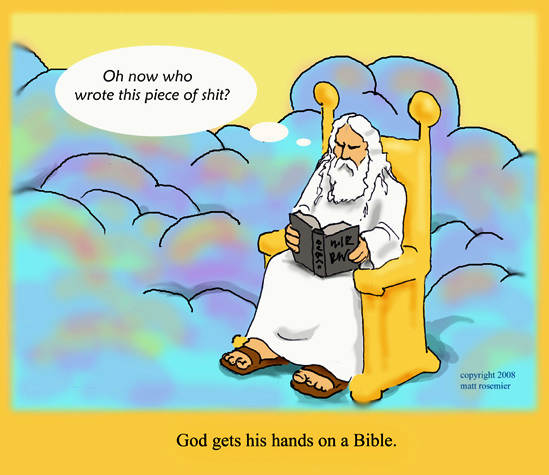
![[golden pen]](https://lh3.googleusercontent.com/blogger_img_proxy/AEn0k_uqsPd4g1hGDS1gLbGQlQgxZirPcT-skNtXa6sP9kSr7J-nTluwRY8kKgp5rLkAAnVG2qUPpkJsfA67WarIBcOOsLHIVS2V1LSu6gtVVBRmv6ZbFXES8q8oxXAx4sU0Kg_E5w=s0-d)
![Reblog this post [with Zemanta]](https://lh3.googleusercontent.com/blogger_img_proxy/AEn0k_tV8bF081_l3WZSGz5CX51xmMgvKe9NdWi6xhc_dyftRN5OcQSkrarMEZi_c85Bg9Iw55HdnBnBPHqwkf9BHp0o8J9DxSrlE3qbfpdhcAx1BWA9WYdEECjIOzvDjvGfpBPac3VYNmnFUN4OodIx2Sz7=s0-d)
![Reblog this post [with Zemanta]](https://lh3.googleusercontent.com/blogger_img_proxy/AEn0k_t09tT6cl5_gebPkIvhsE8QeUx5yq0tDZKUjBS3kqPd82b7MZzIhEloIcQK19Kou64MEmKgBQgzaFeuQLNj170BTt5X5uLVGeCZtx44_LQnDOpnlR3JBEoxOJzpjKh5SJ-TPYOzwUxShCkHLu8wDMqX=s0-d)


